

Ecology and Evolution: The Galápagos Islands

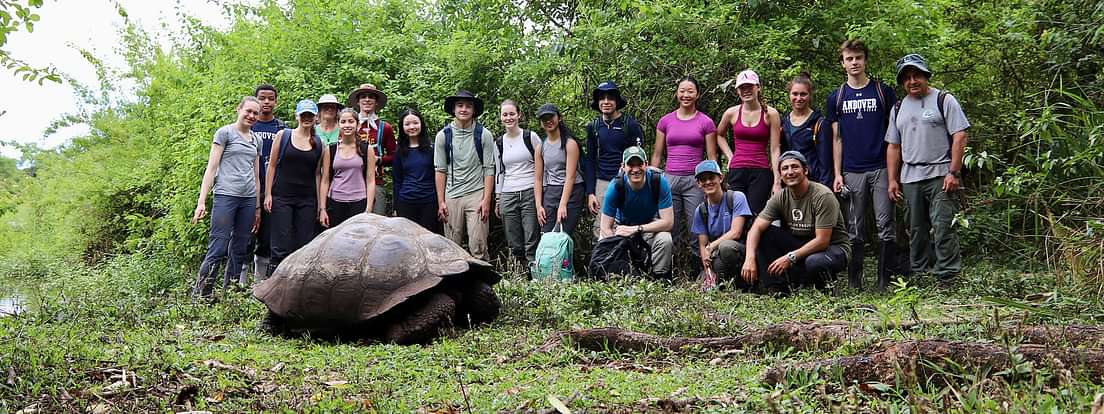
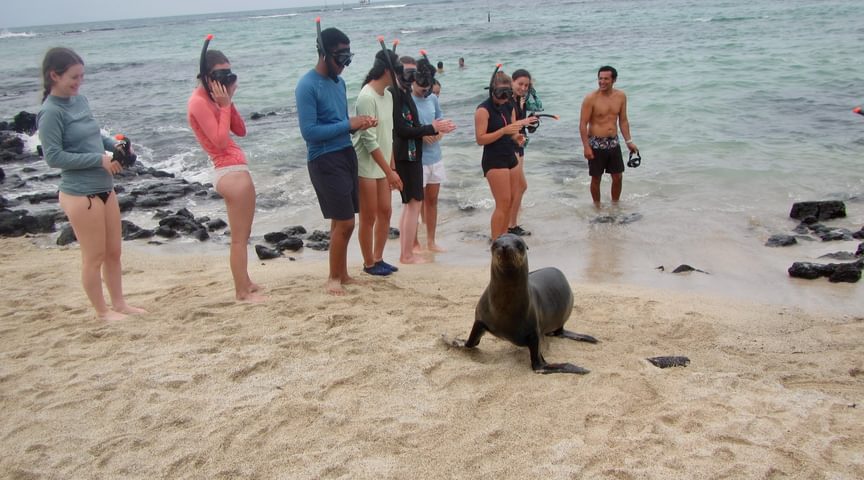
This program is focused on firsthand exploration of the natural world on the islands that helped Charles Darwin create his theory of evolution. Students will engage with scientists in hands-on ecology field work, including studying giant tortoises, removing invasive species, and surveying beaches for microplastics in the Galápagos national parks. Through this work we will learn what makes the Galápagos Islands so unique in terms of ecology and evolution and why its unique wildlife is under threat. The group will spend two nights in Quito, Ecuador, before traveling to the Galápagos, where we will camp in the highlands of Santa Cruz while working with the giant tortoises and learning about the terrestrial ecosystems. We will then boat over to Isabella Island where we will learn in aquatic ecosystems, before traveling back to Santa Cruz and the town of Puerto Ayora for kayaking and bird identification to wrap up the program. This program will be full of adventure with hiking in the highland forests, trips to remote beaches, and numerous snorkeling excursions to experience the Galápagos wildlife up close.
Snapshot
Explore what makes the Galápagos Islands' terrestrial and aquatic ecosystems unique through hands-on science and conservation work in the Galápagos National Park.
Program Dates: June 1-13, 2026
Program Themes: Evolution, conservation ecology, hands-on science, marine and terrestrial ecosystems
Program Leaders: Mr. Keith Robinson and Ms. Heidi Wall
Maximum Coat: $8,200