
May 20, 2026
Beyond the frame
William Drake ’50 helps deepen the Addison’s storyby Rita Savard
On quiet afternoons, Bill Drake often slipped into the Addison Gallery—not for an assignment, but for the simple pleasure of looking. “I was quite introverted,” he remembers, “but the Addison was a wonderful retreat for me.” He would stand for long stretches in front of the Thomas Eakins’ portrait of a professor framed with cryptic formulas. “I went back to that painting many, many times,” he says. “The more I looked, the more it opened up to me—like a person in a conversation.”
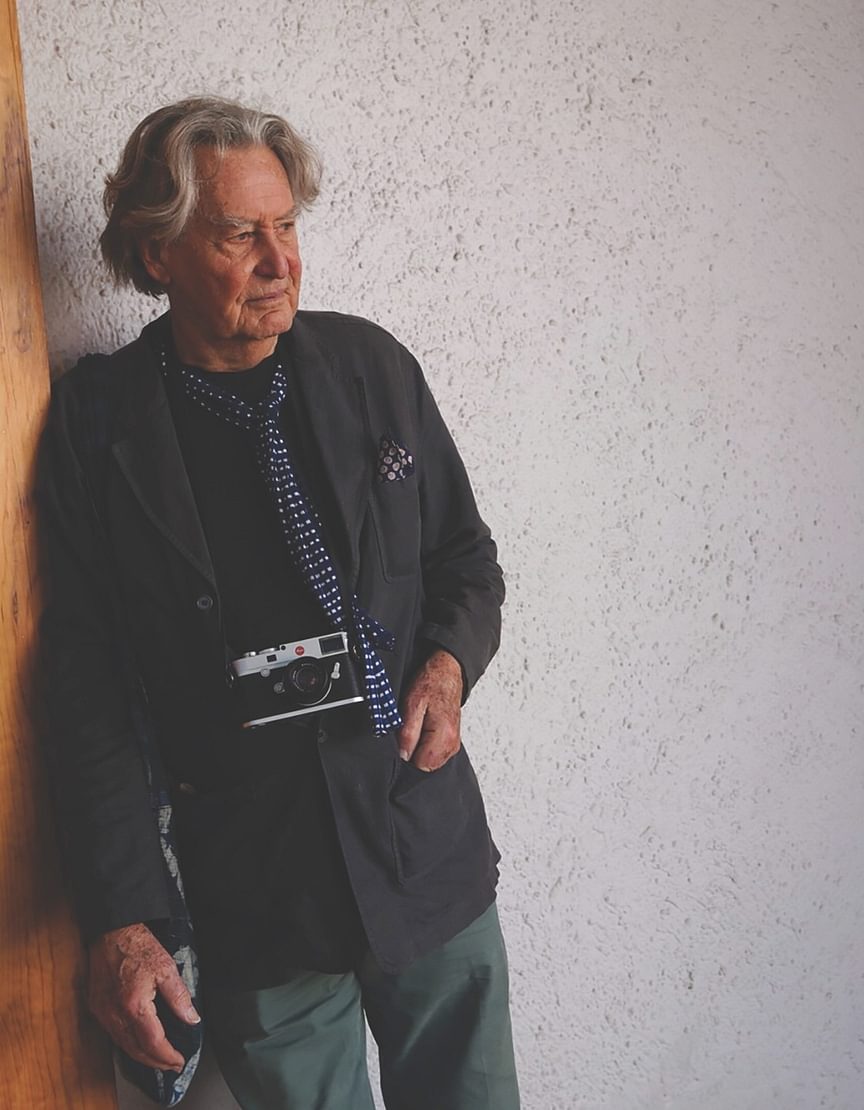
 William Drake ’50 donated a collection prints by acclaimed Black artists to the Addison Gallery of American Art | Photo by JoAnn Carney
Those early moments of close looking stayed with him. They helped shape the instincts that would guide his long architectural career and, decades later, inspire a gift that is reshaping the Addison’s own story: a collection of prints by acclaimed Black artists Martin Puryear, Stanley Whitney, Willie Cole, McArthur Binion, and Mary Lee Bendolph.
Addison Director Allison Kemmerer calls the gift “truly transformative,” noting that it “adds incredible depth to the Addison’s strong print collection and its works by Black artists.”
Some pieces amplify the museum’s existing strengths—Puryear and Binion, for example, complement earlier gifts from Drake, including a Puryear sculpture and a monumental Binion painting. Others fill critical gaps. The prints by Mary Lee Bendolph, one of the most revered Gee’s Bend quilt makers (in Boykin, Alabama), are the first works by this artist to enter the collection.
According to Kemmerer, the importance of these gifts is underscored by the fact that they are being put to immediate use in two permanent collection exhibitions on view this spring. “Martin Puryear: In Print” features all eleven of the Puryear prints donated by Bill and his wife JoAnn and “Little Boxes” includes prints by Bendolph, Binion, and Cole.
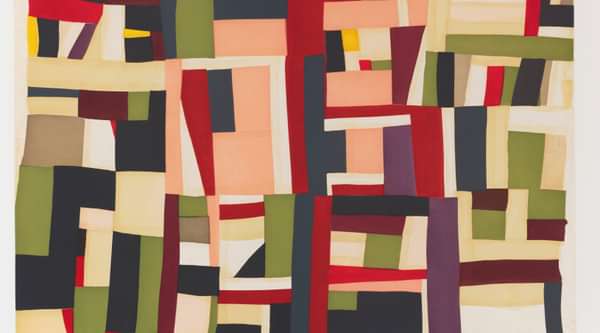 A color softground etching with aquatint and spitbite aquatint titled "GETREADY." Born in 1935, artist Mary Lee Bendolph is an acclaimed quilt maker and printmaker.
Drake’s love of art begins with family. His grandfather and great uncle built the historic Drake Hotel in Chicago, but when the Great Depression hit and the hotel business stalled, his parents headed to the countryside. It was on his family’s farm in Illinois that he began drawing horses. At 15, he was enrolled in Phillips Academy.
Classmates, like Ivan Chermayeff ’50—who later forged some of the most recognizable corporate logos of the second half of the 20th century—pushed him artistically. When drawing horses was no longer giving Drake the results he was looking for, Ivan told him, “‘Don’t try to make it look exactly the way it is. Draw what you feel.’ That was great advice.”
He carried that sensibility into adulthood. After earning a master’s in architecture from Harvard University, Drake worked for Mies van der Rohe before becoming a partner at Skidmore, Owings & Merrill. With his wife, the photographer JoAnn Carney, he is known for designing minimalist, modernist residences and commercial buildings.
His approach to collecting art mirrors that precision and feeling. “I never bought art because I thought it would appreciate in value,” Drake says. “I bought it because I saw something in it that spoke to me.” Puryear’s wooden hoop sculpture—Drake’s first major purchase—became a revelation. “It was a living piece of sculpture,” he recalls. “Depending on the light and humidity, it moved every day.”
Other works resonated just as deeply: Cole’s ironing boards echoed domestic memories from his childhood; Bendolph’s quilt-inspired prints evoked warmth in a drafty farmhouse; Binion’s layered identity grids “immediately touched me,” Drake says. “The symbolism was powerful.”
Art, he adds, is essential to the human experience and the way we share our stories. “The Addison’s collection laid the foundation for my life,” Drake says. “If these works help spark that same feeling for another student, then that’s the real gift.”
Other Stories