

June 11, 2026
At the core of teaching
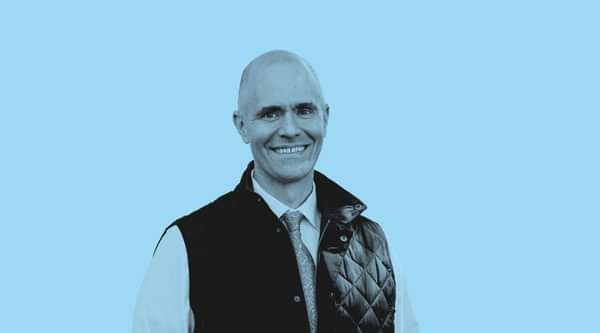
A conversation with Dean of Faculty Ben Temple P’28Dean of Faculty Ben Temple P’28 joined Andover in July 2025, having most recently served as head of the Upper School at Francis Parker School in San Diego. Throughout his career, he has been a teacher, mentor, and leader at a wide array of institutions, including The Tatnall School, Westtown School, Global Online Academy, The Blake School, and Collegiate School. Here, Ben discusses his path to PA, his pedagogy, and the promise of what’s next for the Academy’s educational ecosystem.
What first drew you to Andover Hill?
Throughout my career in independent schools, I’ve known Phillips Academy to be a special place. As I researched the role, I became ever more impressed with the school’s historic mission to educate youth from every quarter—embodied today by its outstanding faculty and talented students. These things, combined with our shared commitment to provide a singular academic program, quickly drew me in.
What experiences have helped shape your professional acumen?
I started my career as a history teacher and rowing coach, living in a dorm with students. From that beginning, I’ve worked in college counseling, as a grade dean, division head, and now dean of faculty. My pathway to this role has been student-facing throughout, which frames how I approach my vocation.
My pedagogical background has been shaped by leadership positions at both boarding and day schools and working alongside outstanding teachers of every discipline. Each of my colleagues has had their own unique voice in the classroom, but the most effective teachers share some common elements: a dedication to teaching the principles of scholarship, care for and about students, fidelity to high standards, and an unwavering belief in student potential. Finally, these colleagues have genuinely enjoyed the full scope of working in a learning community with secondary school students, with all the joys and possibilities such a life entails. All this I embrace in my role today.
How would you describe PA’s distinct brand of teaching excellence—and how have you become part of the campus culture?
I once used the word ‘magic’ to describe our brand of teaching excellence. Of course, it’s much deeper than that. What is distinct about Andover is the faculty’s earnest and unfailing devotion to student learning. We maintain this devotion in every corner of campus and find ways to teach authentically—prompting students to be curious, to learn more, and, when appropriate, to change their minds. This openness and eagerness, driven by rigor, is our hallmark.
Teaching is, at its core, an act of empathy. Our hope is that faculty understand the experiences of students and respond accordingly. This work is the art behind exceptional teaching—and deep learning.
”What are some of the challenges and opportunities surrounding the acquisition and dissemination of knowledge today?
The challenges are well established. Principally, we face a deluge of digital information from myriad platforms of variable, and often questionable, quality. Next, there’s the constant pull of distraction from all manner of sources that seek to monetize our attention. This makes focused thought and work on any topic or project difficult, especially for young scholars learning how to uphold standards.
The opportunities are just as wide-ranging. Technology, especially the advancement of artificial intelligence, is making it easier to gather information and to understand complicated issues. Yet it’s crucial to engage this array of sources with discernment. Traditional scholarship still applies here. In discussing his exhaustive process of research, the author Robert Caro talks about ‘turning every page.’ I believe this idea is at the root of scholarship, to be curious and always seeking perspectives that are better informed and more comprehensive. Helping our students build this habit is the goal of our work.
What place does empathy have in this learning environment? And what must instructors do to ensure students discover their best scholastic selves?
Teaching is, at its core, an act of empathy. Our hope is that faculty understand the experiences of students and respond accordingly. This work is the art behind exceptional teaching—and deep learning.
Simultaneously, we know students feel best supported when their teachers believe in their abilities even, and especially, before the child has demonstrated the capacity to do so. A mentor of mine at a previous school opened faculty meetings by quoting the poet Robert Frost, who said that a writer’s job is to believe in themselves ‘ahead of the evidence.’ This former colleague adapted that idea to education and reminded us on the faculty that our job is to believe, ahead of the evidence, in each of our students.
Similarly, how do you envision your role in positioning Andover faculty to thrive?
My daily goal is to provide faculty with what they need to be at their best. Sometimes this will be articulating a shared vision that all of us can work to achieve. At other times, it could be providing feedback to help improve classroom practice or simply offering a listening ear. In my experience, supporting faculty is more art than science. Each colleague’s needs are unique, and my role is to understand what kind of support is most appropriate. In some cases, this can be providing concrete suggestions for teaching, lesson building, or assessment structure. In other cases, faculty benefit from a thought partner to talk about student experiences and how to create an optimal learning environment.

As you look back on your first year, what achievements are among the most meaningful? Going forward, what are some endeavors and goals that most excite you?
Being part of the Academy’s presentation of Teaching Foundations was a top highlight of my first fall on Andover Hill. These foundations are one of many things that distinguish PA from other great schools, and conferring them was an excellent way to get to know some of my colleagues more fully. I’ve allocated a great deal of my first year to becoming acquainted with my fellow faculty members—learning about them and from them.
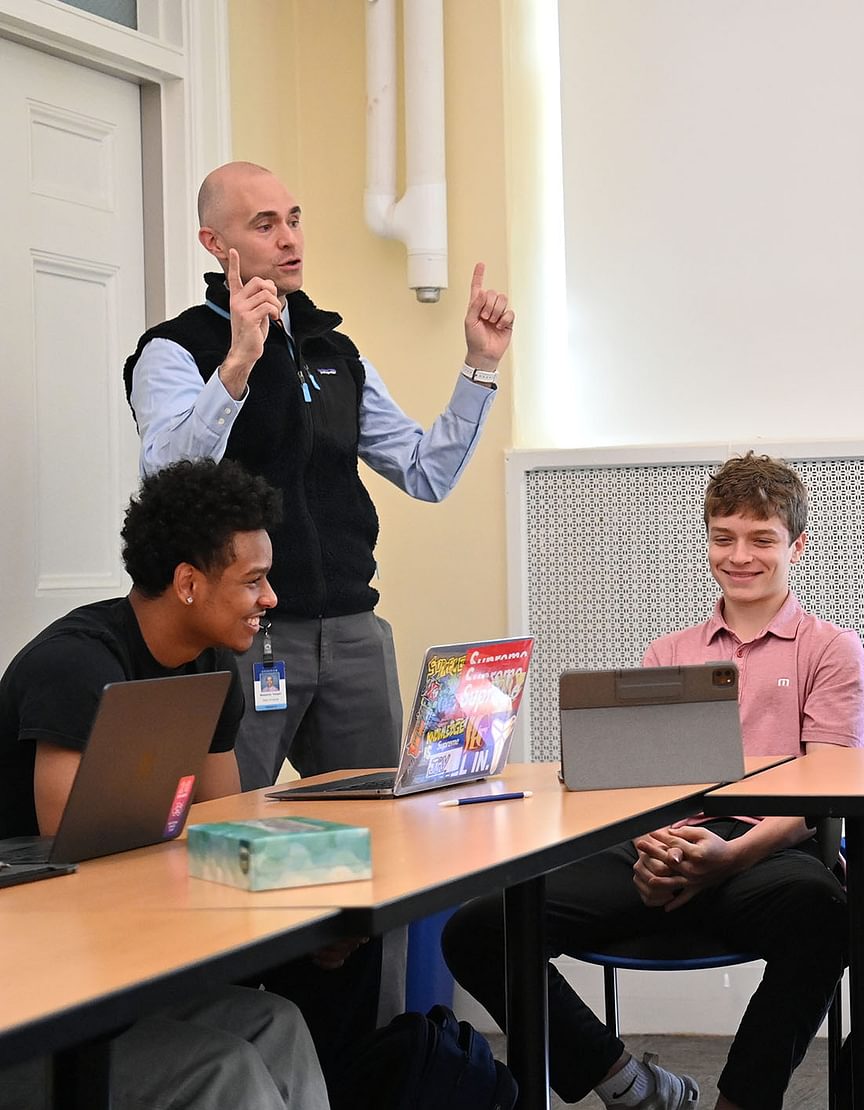
In addition, teaching my section of History 300 has really allowed me to embed myself in academic life in a manner that wouldn’t be possible otherwise. Through this experience and others, I’m excited about enhancing the school’s evaluation and professional growth programs. Plus, there are several excellent recommendations arriving from our Learning Steering Committee, so there is much more to come.
How have you seen philanthropic support dovetail with the school’s academic mission? In particular, how do Teaching Foundations enhance this enterprise?
Philanthropy is a profound investment in our learning community. In my first year, I’ve seen a tremendous commitment to the school’s ongoing priorities of academic excellence and faculty support. Most notably, the recent establishment of the school’s Distinguished Academy Foundations, which will honor individuals who represent the very best in teaching, coaching, or residential life. This, added to the fact that Andover donors have created more than 90 Teaching Foundations over the decades, is remarkable. Similar to endowed positions in higher education, Teaching Foundations provide our instructors with the financial wherewithal to pursue projects and programs that build their professional acumen while inspiring students in the classroom and beyond. In this, Andover stands head and shoulders above its peers.
Any final thoughts you wish to offer?
Simply that every academic success we enjoy at the Academy is one shared with our alumni, families, and friends. Their loyalty to—and love for—our faculty is second to none and never goes unnoticed. If I can embody this spirit in my role, then I know I’m doing my job well.
Categories: Philanthropy
Other Stories

Instructor Hector Membreño-Canales on preserving cultural heritage in conflict zones