
April 15, 2026
Shaping sound
Luthier Cheryl Kluck Nizam ’89 makes instruments for serious musiciansby Jill Clerkin
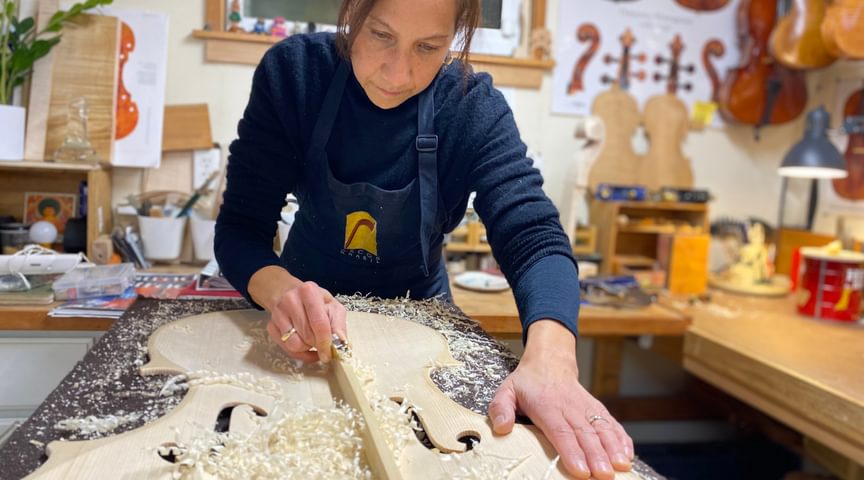
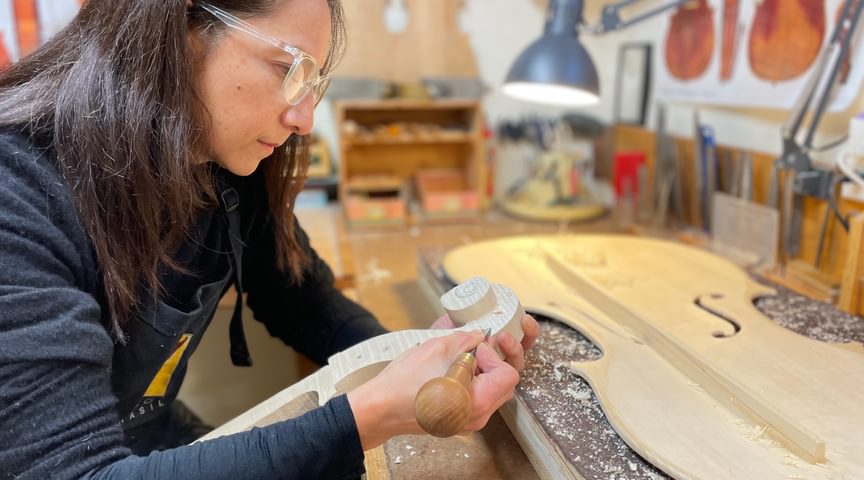
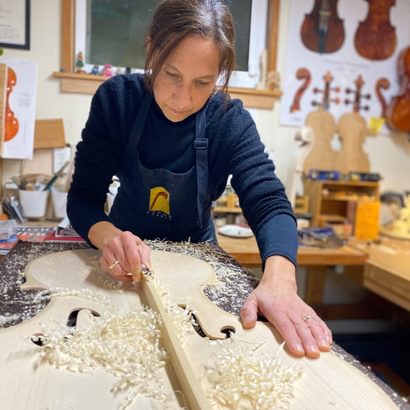
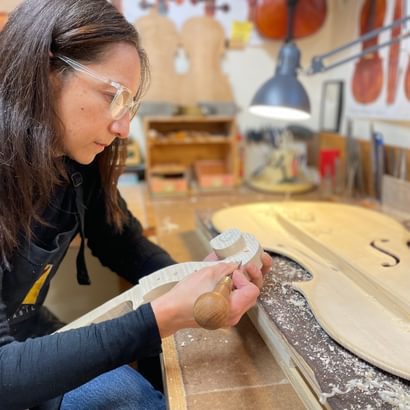
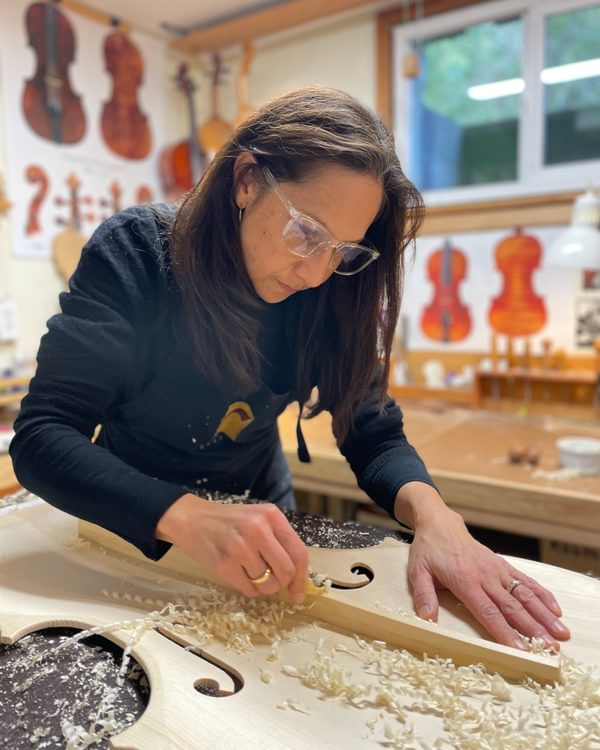
On a quiet street in Olympia, Washington, luthier Cheryl Kluck Nizam ’89 descends a narrow set of stairs and enters what she calls her favorite place to be. Her workshop is flooded with light from new windows she installed herself, and the benches are built to her height and reach. It is, she says, “a really peaceful place to design and carve. Just me and my classical music. No one interrupts me.”
She learned the craft at the esteemed Chicago School of Violin Making and, over the course of 25 years, honed her skills in instrument repair, restoration, and tuning at various high-end music shops. Last year, Nizam committed to her dream of making violins and cellos full time. The journey, she says, was a long one.
Q: When did music become an important part of your life?
A: My mother was a pianist, my father had classical music playing 24/7. There was always music in my home. When I was 5 or 6, I began playing the violin—because that’s what my grandfather in the Philippines played. I learned using the Suzuki method. My mother would play her grand piano and I would learn the songs by memory, well before I could read music. It was wonderful time spent together.
Q: Was there an advantage to growing up barely a mile from PA?
A: Definitely. My parents took my sister and me to lots of concerts at Graves Hall and Cochran Chapel. It was just beautiful, beautiful music—even though I sometimes fell asleep.
Q: When did you unofficially join the Academy’s music program?
A: My violin instructor, Mimi Bravar, also taught PA students. In the sixth grade, she introduced me to William Thomas, the music director. As an eighth grader, before I even applied to PA, Mr. Thomas invited me to play in the symphony orchestra. I was very intimidated, but he was just such a jolly person, encouraging me all the way and treating me like one of the family. He stuck me in the back of the second violins, with these kids, these seniors. Everyone was so welcoming.
Where Music Begins
Q: What experiences as a PA student nurtured your love of music?
A: Mr. Thomas pushed me. He would tap me on the head with his baton. “Let’s focus here,” he’d say, knowing I could do more. By senior year, I had moved to a leadership position in the violin section. Playing chamber music conducted by Peter Warsaw helped plant “the seed.” Chamber music, with its small ensembles, is still my favorite. There was also Music Appreciation with Eric Thomas and Italian with Dr. Pascucci, which sparked my love of Italian language, culture, and opera.
And I took a sculpture class, where I was able to create whatever I wanted. I chose a massive block of hardwood and spent the semester carving. It was the first time I was able to conceptualize something.
Q: What inspired you to make violins?
A: Sophomore year at Syracuse I studied art history and language in Florence. One day, the program offered a field trip to visit a local violin maker. It sounded kind of cool.
I had been to several violin shops back in the States, but inside that shop in Italy, something clicked. I thought, wow, this is a really amazing profession. The maker was from a multi-generational family of violin makers. He showed me instruments in progress, old Italian violins, and fine instruments he had for sale. He handed me a Stradivarius. I just remember feeling awe, playing this instrument that’s 500 years old made by the master.
When I told my parents I wanted to be a violin maker, they didn’t flinch. They knew it wasn’t practical, but they weren’t going to hold me back.
Q: How did you train to become a luthier?
A: I apprenticed in Seattle for a few years and then enrolled at the Chicago School of Violin Making in 1998. We each built three violins, a viola, and a cello and learned varnish, restoration, and repair. We also studied and played old master instruments and learned precisely why they sound so good.
My first violin is hanging in my workshop. It isn’t so great, but I learned how to handle the wood. One absolute: If you take away too much wood, you can’t add it back.
From 1999 until last year, I worked in music shops doing instrument repair and restoration—cutting bridges, fitting sound posts, planing fingerboards, doing delicate tonal adjustments. When you’re working full time, it takes a toll on your body and hands—and after a long day, I didn’t necessarily feel like working on my own instrument. Once I committed to the idea of going full time, to create under my own name, I began building my home workshop.
Q: What makes for an exceptional violin?
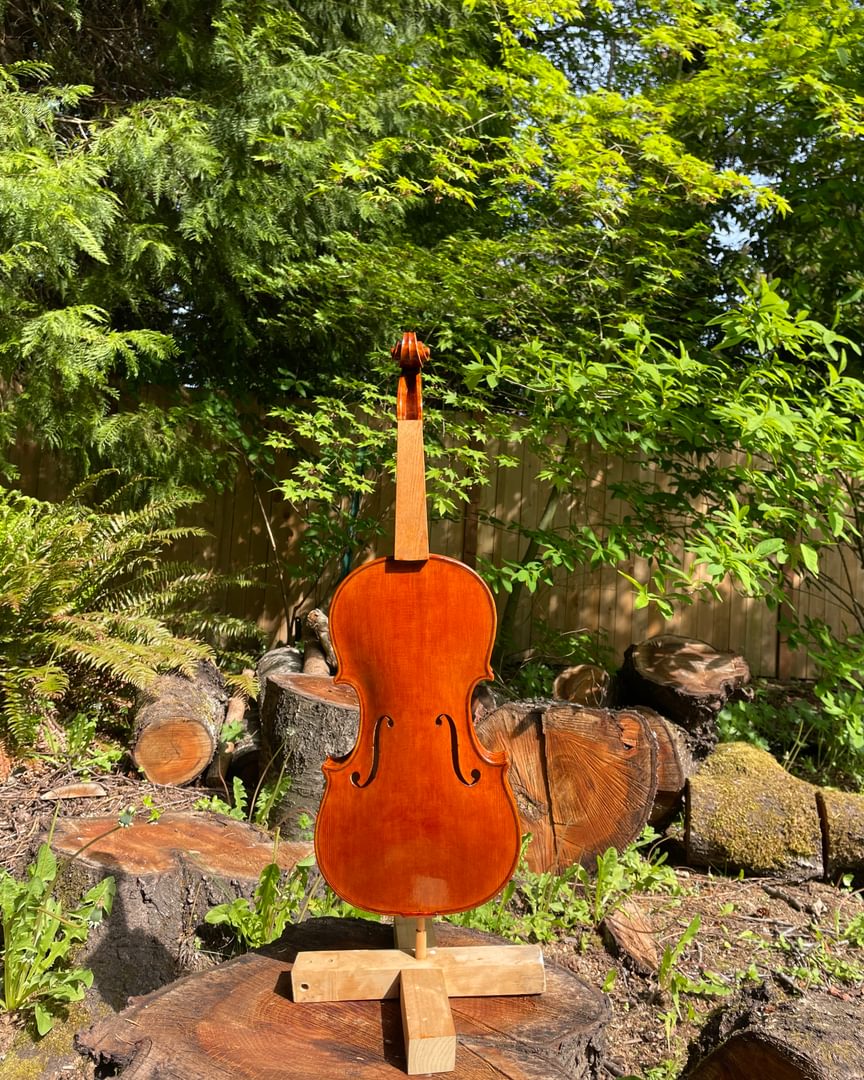
A: Exceptional wood—spruce from the Dolomites or Carpathians, maple from Bosnia or the Balkans. The best tone wood comes from cold, high-altitude forests. Tight annual rings create resonance. Then the wood needs to age four to 10 years before it can sing. Varnish must protect the wood without dampening the sound.
Q: What’s something people might not know about stringed instruments?
A: The more they’re played the better they get. Some say 700 hours before the wood really opens up and produces the richest sound. That’s why some of the oldest violins are the most valuable.
Q: In a dream year, how many instruments would you create?
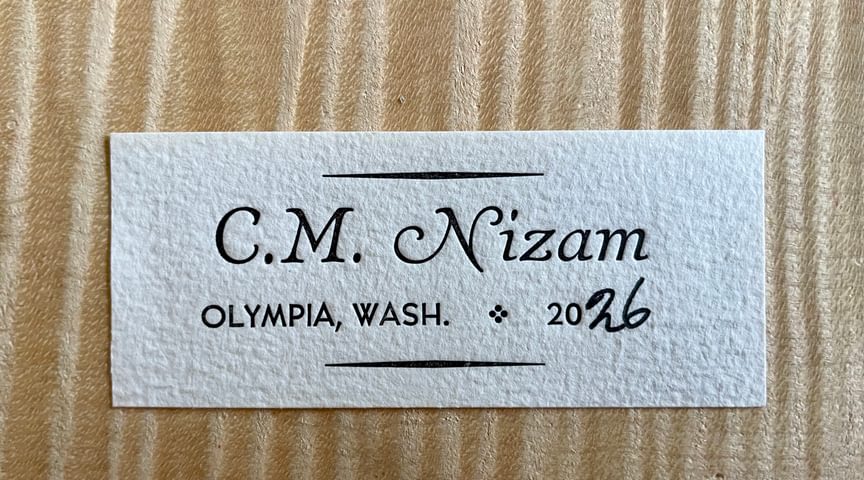
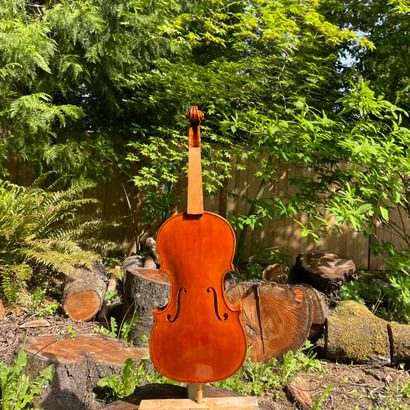
A: Four violins or a cello and two violins. I make nearly every component myself almost entirely with hand tools—fitting the soundpost, cutting the bridge, and shaping the fingerboard. And then there’s the varnishing. It takes about four months to complete a violin, maybe 10 months for a cello. Patience is part of the craft.
Q: What kinds of musicians purchase your instruments?
A: Serious musicians of any age. It is a particular joy when a young player chooses their first instrument and discovers the wide range of voices and tonal personalities each violin offers. The process of attuning themselves to the instrument that responds most naturally to their touch is the beginning of a meaningful relationship. Often, that violin becomes a lifelong friend.
Q: How does it feel to be doing what you love?
A: My heart is feeling full. I want to build a body of work—something meaningful, something lasting. I’m really excited about the next 10 years.
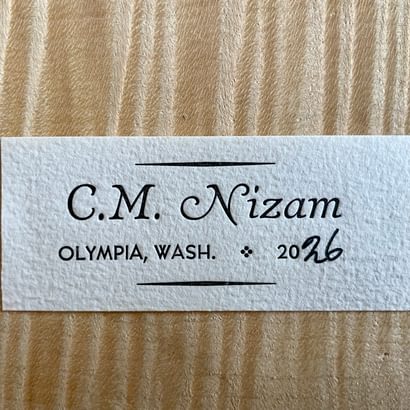
To follow Cheryl's work, stay tuned for the launch of her new website at www.cmnizamviolins.com
Other Stories

Ceremony will take place June 6 during Reunion Weekend
The latest from Search Committee Chair Eric Zinterhofer ’89, P’18, ’19