
December 11, 2025
Small stories, big impact
Inside the movement to reimagine local newsIt was in the pages of a local newspaper that 12-year-old Gary Lee discovered a life-changing opportunity—a scholarship that sent talented students to premier college preparatory schools. That single story planted a seed, leading Lee to become an A Better Chance scholar at Phillips Academy and eventually to a decades-long journalism career that took him around the globe from Russia to Peru, mastering five languages along the way and covering some of the world’s most pivotal stories.
Today, Lee ’74 is back where it all began, at The Oklahoma Eagle—the same paper that first cracked open his world. Now editor of one of the nation’s oldest Black-owned newspapers, he’s part of a movement reimagining community journalism. From coast to coast, a quiet revolution is taking place—including PA alumni spanning media platforms and generations—reminding us all that local news remains a vital force for connection wherever journalists are invested in telling the stories of people who live, work, and hope together.
“Journalism has always been about connection,” says Lee, who recalls a time before the internet, when communities relied on their local newspaper as a trusted source to stay informed. “It’s about listening to the heartbeat of a community—its triumphs, its struggles—and helping neighbors see one another more clearly.”
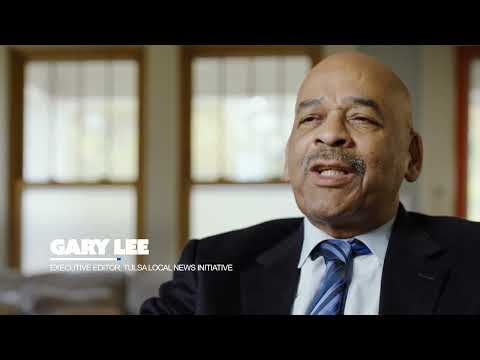
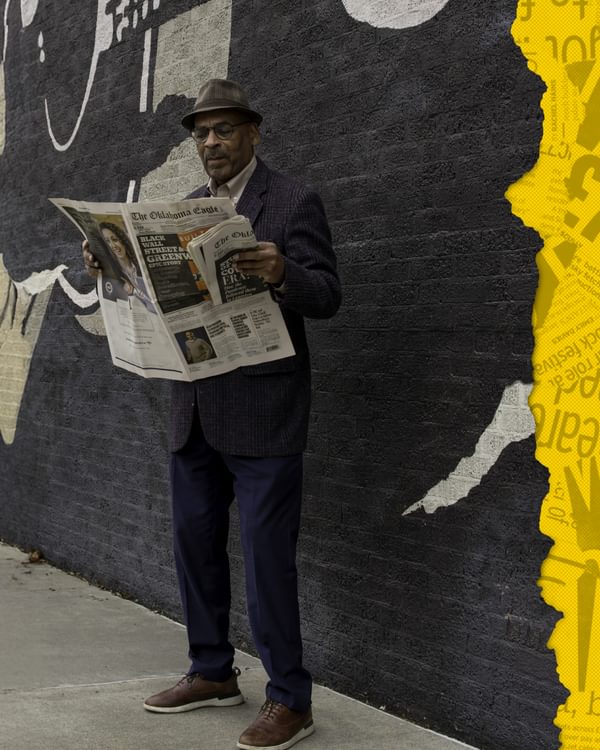 Gary Lee ’74 | Editor of The Oklahoma Eagle and The Tulsa Local News Initiative
In Lee’s lifetime, journalism has undergone seismic change, disrupted by the digital revolution with social media and artificial intelligence challenging traditional business models. Local news—or at least the version once rolling off a printing press—is in crisis. Since 2005, more than 3,300 print newspapers have vanished. And this year, for the first time since the early 1900s, there are fewer than 1,000 dailies remaining in the U.S., leaving 50 million Americans with limited access to local coverage, according to the State of Local News Report released in October by Northwestern’s Medill Journalism School.
“Make no mistake—when you see the number of news deserts across the nation reach an all-time high—it is alarming,” Lee says. “But there is also a growing network of journalists, editors, and nonprofit leaders who believe that local storytelling still has the power to knit communities together and strengthen democracy.”
Researchers for the Medill study also point to a hopeful trend: a rise in successful news startups. Over the past five years, more than 300 new outlets have launched. Former head of school John Palfrey P’21, now president of the John D. and Catherine T. MacArthur Foundation, is helping lead that charge.
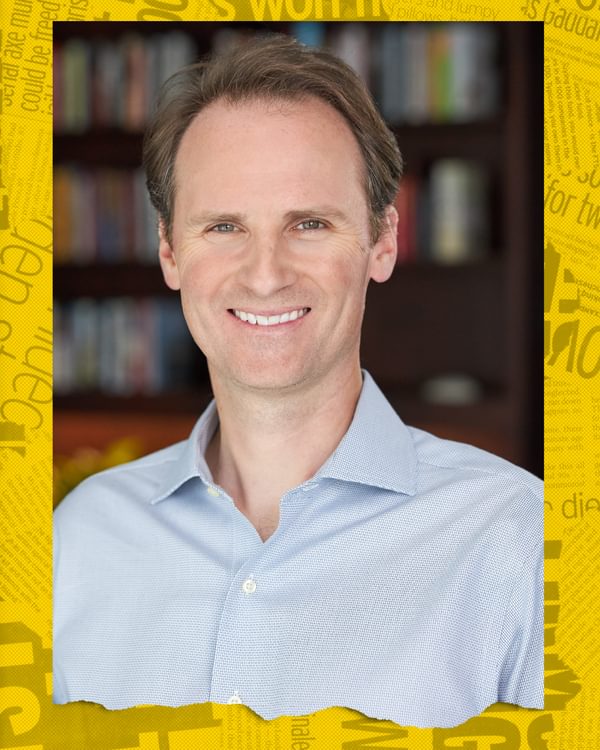 John Palfrey P’21 | The former head of school is working to save local news through the MacArthur Foundation's bold Press Forward initiative.
In 2023, the MacArthur Foundation rolled out Press Forward, committing more than $500 million over five years to rebuild the nation’s local news infrastructure. As of October, the initiative has already distributed $400 million to newsrooms—supporting training, education, and new ways to sustain and share essential reporting that keeps communities informed and connected.
“What are the things that actually join people instead of divide them?” Palfrey asks. “Whether the football team did well or not, the kid who’s going to the quiz bowl or spelling bee, or how to solve a problem like congestion or housing or homelessness—things we all share in our communities from one day to the next—these are what bring us together across divides. Local news is often the bridge.”
Free Speech, Student Protest, and the First Amendment
The story of American journalism begins with rebellion. The first newspaper in the colonies—Publick Occurrences, Both Foreign and Domestick—hit the streets of Boston in 1690 and was shut down after just one issue. But the idea it birthed—that people have a right to know what’s happening in their communities—grew into a revolutionary force. By the time America secured its independence, freedom of the press had become so central to democracy that it earned a place in the very first amendment to the Constitution.
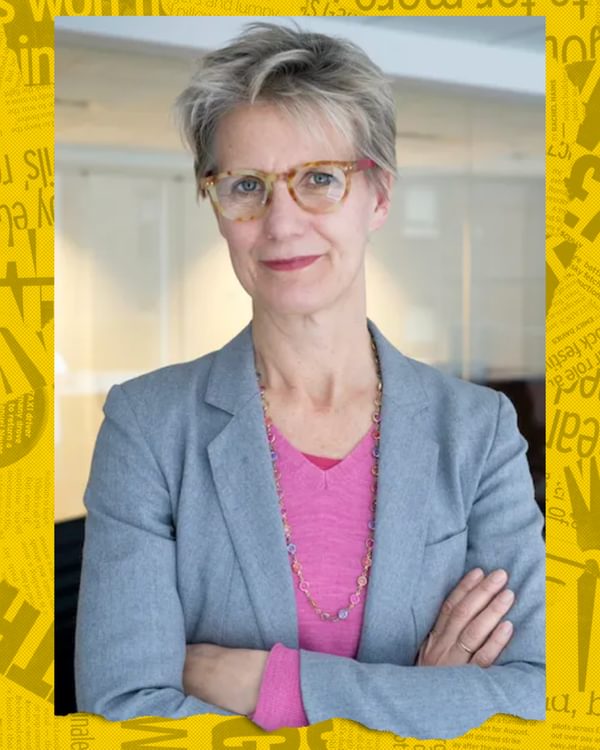 Carroll Bogert ’79 | The new CEO of The City, is bringing her knowledge of sustainable business models to the local independent newsroom covering New York City's five boroughs.
“That’s no accident,” says Carroll Bogert ’79, CEO of The City, a nonprofit newsroom serving New York City’s five boroughs. “Information—real, fact-checked facts—are the lifeblood of democracy. Our republic cannot survive without an independent press.”
Bogert’s career has spanned continents and causes—from foreign correspondent in Beijing and Moscow, to communications leader at Human Rights Watch, to nine years as president of The Marshall Project—a Pulitzer Prize-winning nonprofit news organization reporting on the U.S. criminal justice system. At The City, she’s working to restore trust and accountability in urban news coverage—and rally the subscribers to sustain it.
Bogert believes local newsrooms should be treated like other civic institutions—schools, hospitals, museums—that require public investment to survive. “There’s despair at the national level where the conversation is so rancorous and partisan,” she says. “We need to rebuild trust from the ground up, and that starts with local news.”
That same conviction drives the next generation of journalists—including Frank Zhou ’22, who reported from inside Harvard Yard in April 2024 when students took over the area, establishing an encampment to protest the university’s investments in Israel and its suspension of the Palestine Solidarity Committee. As the founding host and producer for The Crimson’s flagship news podcast, Newstalk, Zhou and his team worked through the night to tell the stories of classmates and faculty with nuance and care.
“We were living alongside the people we were covering,” he says. “Because of that closeness, we had to tell their stories with more tact and more heart than anyone outside could.”
When thinking about the history of social movements in the U.S.—suffrage, civil rights, LGBTQIA+, and #MeToo, to name a few—Zhou says journalists can pay a high price for safeguarding speech that people disagree with. At the time of writing this story, dozens of reporters had turned in access badges and exited the Pentagon rather than agree to government-imposed restrictions on their work, pushing journalists who cover the American military further from the seat of its power.
The nation’s leadership called the new rules “common sense” to help regulate a “very disruptive” press. “There has never been a time when the work of journalists has been more threatened—but amid those threats, the work also feels more timely, urgent, and necessary than ever,” Zhou says. “I think for some, the idea of local news brings a caricature to mind of a septuagenarian reading a print paper. To that I say let Andover’s young alumni be a testament to the shining fact that good journalism and local news spans generations.”
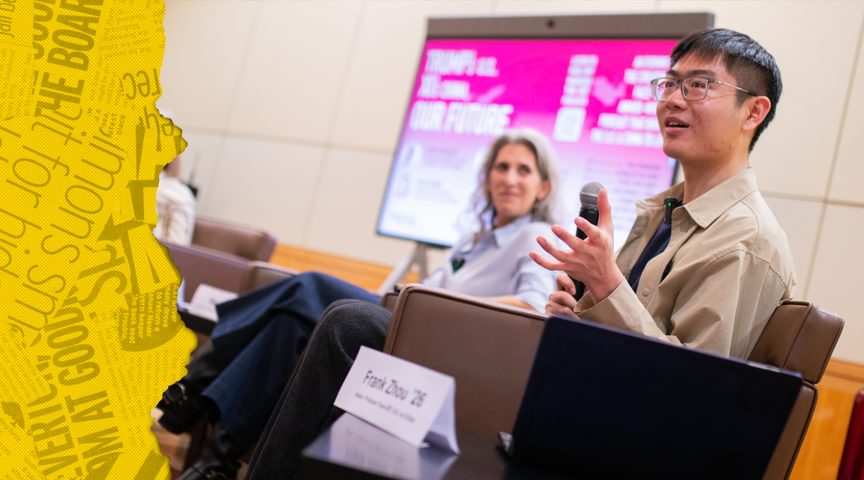
Information—real, fact-checked facts—are the lifeblood of democracy. Our republic cannot survive without an independent press.
”Meeting People Where They Are
On any given day, Kristina Rex ’11 might be wading through floodwaters, standing in front of a courthouse, or interviewing neighbors on a suburban street. A reporter for Boston’s WBZ-TV, Rex has built a career telling stories that matter to the communities she covers, including Maine’s opioid epidemic, the aftermath of Hurricane Harvey in Texas, and the daily realities of life during the COVID-19 pandemic.
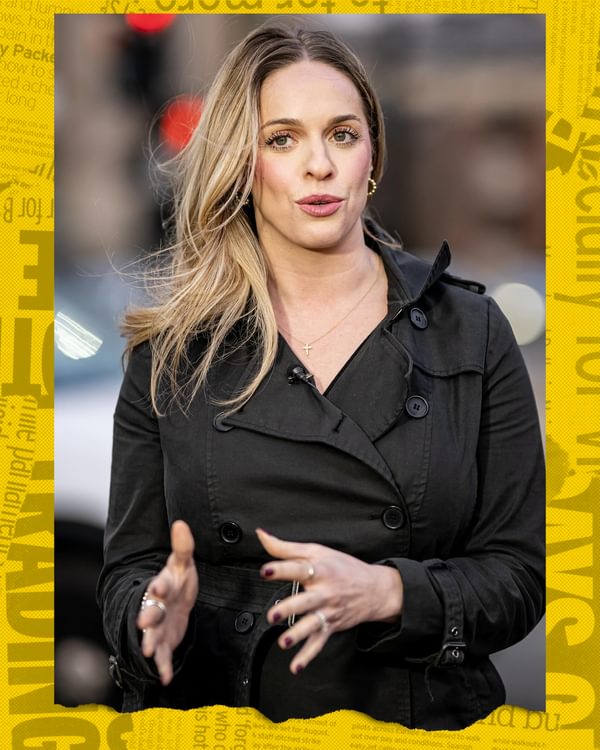 Kristina Rex ’11 | Reporter at WBZ-TV Boston
She has also seen the frenzy of national news outlets pouring into a community to broadcast scenes of destruction or chaos before quickly moving on to chase the next headline. Local reporters, she says, remain in the long game, walking the length of a storm and connecting with people to tell their stories through all phases. “In local journalism, I make my own calls, write my own scripts, and stand on the ground where the story unfolds,” Rex explains. “We’re doing great work with far fewer resources, but the impact is immediate and real. Our work can literally change what happens in a town.”
Her investigative reporting in Maine exposed fraud that led to the arrest of an Australian developer who had promised to revive a shuttered ski mountain. During the pandemic, her coverage connected neighbors to food programs and vaccine clinics. And this year, her social-media updates on the widely watched Karen Read murder trial gained her more than 50,000 followers overnight and helped uncover corruption in a small-town police department—sparking a statewide conversation about transparency.
Rex has watched the industry shift dramatically. Two newspapers continue to disappear each week in the U.S., eroding trust and leaving communities without reliable coverage. As local papers vanish, audiences migrate to social media—where misinformation spreads easily. “People across the political spectrum distrust news, and algorithms feed us only what we already believe,” she says. “That’s why media literacy matters more than ever.”
Research from institutions like the American Journalism Project (AJP), a venture philanthropy organization investing in and building digital nonprofit newsrooms, show that when local news outlets close, corporate and political misconduct increases—proof that healthy communities need vigilant and reliable watchdogs.
Knowing who owns your local news is part of holding news organizations accountable to the communities they serve. As major corporations and private equity firms—focused solely on short-term profits—bought up and strip-mined hundreds of local news outlets, these acquisitions have accelerated the decline of local journalism, leading to news deserts across the U.S. “Given the role local news publications have in driving citizen political engagement, in disseminating information during crisis events, and in sustaining and developing local identity, understanding the acquisition on local news output is crucial in identifying and drawing attention to unhealthy media environments,” the AJP warns.
For Rex, the motivation remains personal. “We—local reporters—are you,” she says. “I’m a new mom in suburban Massachusetts. I vote in local elections, go to school board meetings, get frustrated by the same potholes on my street. There’s no puppet master pulling the strings. We care enough about our communities to tell the stories that matter.”
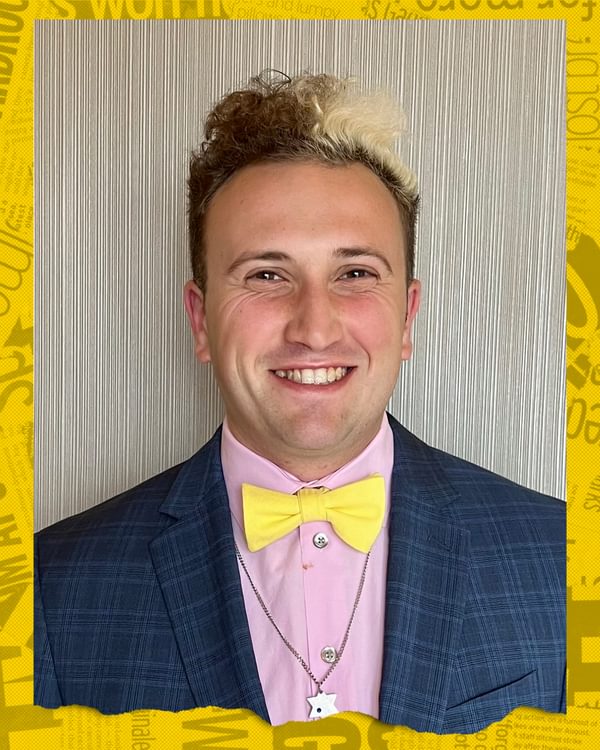 Ethan Brown ’17 | Brown's innovative approach to environmental communication is benefiting journalists at the University of Rhode Island's Metcalf Institute.
Other journalists, like Ethan Brown ’17, are creating communities for people with shared concerns rather than shared ZIP codes. His award-winning climate podcast, The Sweaty Penguin, localized a global issue by anchoring stories in everyday stakes—energy bills, jobs, and public health—mixing humor with rigorous, solutions-driven reporting. Launched while Brown was still in college, the show grew to more than 200 episodes, was licensed by PBS’s climate initiative in 2021, and even replaced a textbook in a University of Kansas course.
“Podcasts are in listeners’ ears—you feel like you know the host,” Brown says. “That sense of trust can foster consistent engagement, particularly around issues that can otherwise feel abstract or overwhelming. “Now at the University of Rhode Island’s Metcalf Institute, Brown helps New England newsrooms strengthen their climate coverage by training journalists to connect science and community. “Local isn’t only geography,” he says. “It’s the issues we live with every day—that’s where a podcast can create the same civic space a neighborhood paper once did.”
For nearly 60 years, congressionally allocated funding has been a cornerstone of public media, supporting NPR, PBS, and their member stations—often the only remaining news source in rural areas. But in July, Congress rescinded $1.1 billion from the Corporation for Public Broadcasting, eliminating all federal support and dealing the hardest blow to small, resource-strapped outlets that serve those communities. Alumni say this crossroads moment demands new thinking—and bold models—to sustain local news for future generations.
Reimagining Local News
Gary Lee grew up in Tulsa’s historic Greenwood District—a proud, predominantly Black community once known as Black Wall Street. A century ago, Greenwood was one of the most prosperous Black neighborhoods in America, until white mobs burned 40 blocks of businesses and homes in the 1921 Tulsa Race Massacre.
From those ashes rose The Oklahoma Eagle—a paper built to preserve truth and rebuild hope. Lee returned home to Tulsa in 2021, where he’s working to ensure his hometown news will last another 100 years.
“I was raised by the North Tulsa community—the Black community of Tulsa,” Lee says. “They say it takes a village to raise a child, and that village came together to raise me. When it came to giving back and honoring where I came from, I realized I had that opportunity—and I should jump at it.”
Lee is leading The Eagle and a new venture, The Tulsa Local News Initiative. The nonprofit newsroom, launched with support from the AJP and the MacArthur Foundation, is guided by community voices. More than 300 Tulsans helped shape its mission: more local reporting, stronger representation, and journalism that helps residents meet their basic needs. Out of those community listening sessions, the newsroom created a new beat called Your Money, which includes financial advice, news on the cost of living, food and health resources, and more.
“We’re trying to make news participatory,” Lee says. “The people who read us should also help shape what we report.”
Under Lee’s leadership, The Eagle is partnering with local outlets like Tulsa World, KOSU, and Focus: Black Oklahoma to share stories, reduce duplicative work, and expand access to reliable news. His newsroom is also launching Tulsa Documenters, a program that trains and pays residents to cover public meetings. “Our mission isn’t just to put out a regular publication,” he adds. “It’s to create spaces for conversation—sometimes in cafés, sometimes in libraries, sometimes at the state fair.”
Lee’s vision embodies Press Forward’s belief that the future of journalism depends on local collaboration, not competition. “People have lost faith in national news,” he says. “But they still trust local news. That’s our opportunity—to rebuild that trust from the ground up.”
If the first generation of alumni journalists helped define freedom of the press, those on the frontlines of news today are finding new ways to protect it. Tom Rubin ’79 is quick to say he “bleeds the First Amendment.” Once editor of The Phillipian, he went on to write for The New York Times and then studied media law at Stanford. He now serves on the board of the Reporters Committee for Freedom of the Press, which supports local newsrooms through legal hubs in five states.
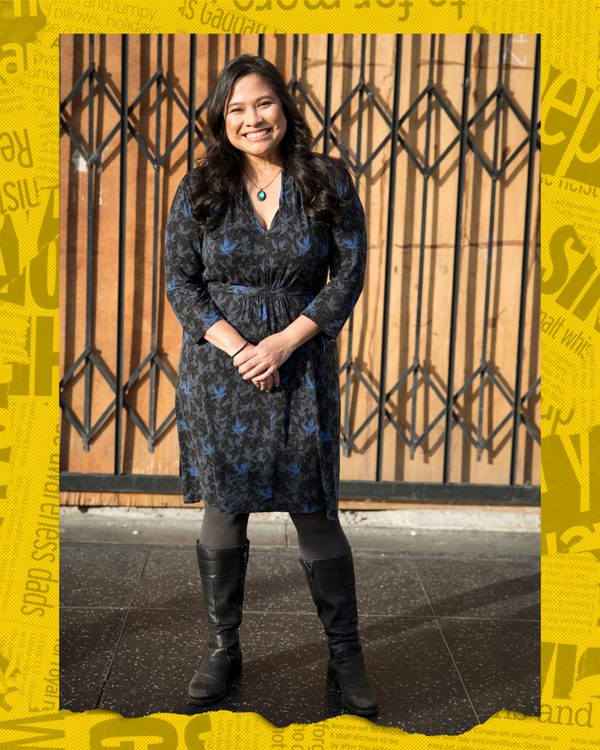 Noy Thrupkaew ’96 | Investigative journalist advancing programs that support in-depth reporting across diverse newsrooms
“The ability of reporters to do their jobs with the rights granted under the U.S. Constitution is vital to our democracy,” Rubin says.
The chief of intellectual property and content at OpenAI, Rubin is also exploring how technology can strengthen—not supplant—journalism. AI, he believes, can transform local news by freeing reporters from tedious work and giving readers new tools for understanding.
“AI won’t replace reporters—it will help them work smarter,” he says. “We’ll spend less time locating information and more time analyzing it. That’s how journalism becomes stronger.”
From digesting 500-page government reports in seconds to translating stories across languages or personalizing local newsletters, Rubin sees AI as “a recipe for revitalization—if we embrace it.”
At Type Investigations, Noy Thrupkaew ’96 is supporting the next generation of reporters and publications. As the director of partnerships, she mentors journalists from underrepresented groups who are pursuing high-impact investigative work. “Investigative reporting isn’t a luxury,” Thrupkaew says. “It’s a fundamental part of journalism’s mission. When local reporters are equipped to dig deeper, they don’t just inform their communities—they transform them.”
Her programs have helped expose systemic inequities in housing, policing, and health care—issues that affect millions yet often begin as stories of one neighborhood, one family, one voice finally being heard. “Many local journalists already have the trust of their communities,” she adds. “They just need the support to turn that trust into change.”
Palfrey, whose Press Forward initiative has helped support award-winning investigative reporting at Type Investigations, says the mission remains democracy’s cornerstone.
“Holding power to account is necessary if democracy in a small town is going to work,” he says. “The First Amendment is under stress like never before, but I believe there are certain things we won’t stand for as an American public—and eviscerating the First Amendment is one of them.”
As newsrooms continue to evolve for a new era, the core calling remains the same: to witness, to question, to connect. In the hands of journalists who listen and write with care, local news endures as both a record and a reflection—democracy’s conscience in every form it takes.
“Thomas Jefferson said he’d rather live in a world without government but with newspapers than in a world with government and no newspapers,” says Bogert. “It’s the First Amendment for a reason—if you care about democracy, you have to care about the survival of good journalism.”
To learn more about how you can support local news, visit pressforward.news.
Categories: Magazine
Other Stories