


November 11, 2025
An Elm Walk Through Time
Exploring Andover’s roots through its landscapeAt the edge of Phillips Academy’s sprawling green lawn stands the Great Elm, a towering sentinel estimated to be more than 300 years old. Its massive trunk—over 21 feet in circumference—has withstood every storm and outlasted generations of students and faculty. Beneath its broad canopy, the Academy’s story has unfolded: political and cultural shifts, architectural transformations, the steady rhythm of New England seasons and life on campus.
“Landscapes often outlast the people who shape them,” says Allison Guerette, manager of sustainability, climate, and energy programs. “An elm that has stood for centuries has lived through so much that its depiction in written word and images can help mark turning points in a community’s story.”
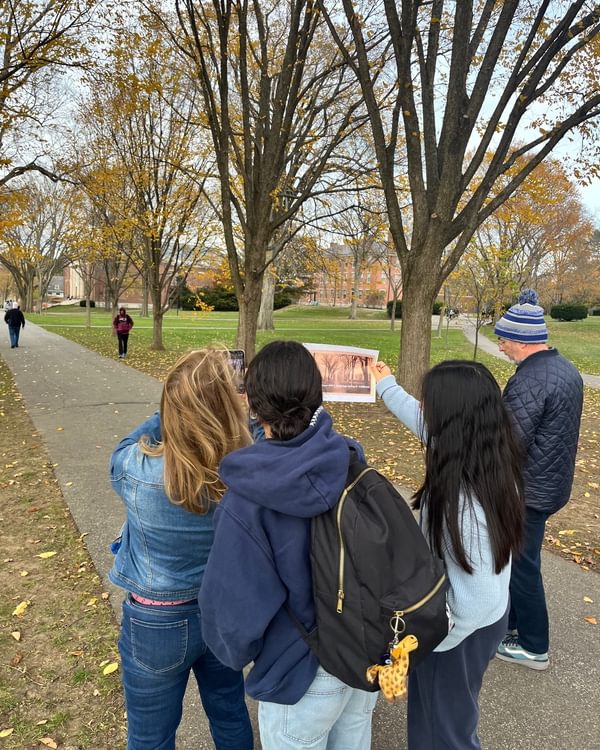 Sylvia Su ’29 and Nadine Carniaux ’29 find clues to Andover's past along the Elm Arch.
Students, faculty, and staff took a closer look at Andover’s story through their natural surroundings at the Addison Gallery’s Museum Learning Center on Friday, Nov. 7. An Elm Walk Through History: Exploring PA’s Roots by Looking at its Landscape turned participants into detectives as they sifted through archival photographs of the iconic Elm Arch—a sweeping double row of elms planted in the early 1800s along the edge of the Great Lawn, once known as Seminary Common. The trees have since framed the heart of campus life, even as storms, pest and disease pressure, and time continue to take their toll.
In the late 1800s and early 1900s, the famed Olmsted Brothers—trailblazers in landscape design—and architect Charles A. Platt helped shape Andover’s evolving campus. Their series of plans guided both the relocation of existing buildings and the thoughtful placement of new ones, creating a harmonious rhythm of architecture and nature along the Elm Arch. The Academy’s appreciation for its elms is well-documented: after a devastating ice storm in 1921 destroyed many of its trees, the community rallied to restore them, replanting mature elms gathered from across campus and beyond.
By the mid-20th century, a silent killer crept through America’s landscapes: Dutch elm disease. Carried by the tiny elm bark beetle, the fungus felled millions of trees—many in Andover’s graceful canopy among them. Today, the threats have evolved but the stakes remain just as high. A shifting climate brings warmer air, fiercer storms, and longer droughts. In September 2023, a sudden microburst ripped through campus, damaging several elms. Add in new pest patterns and even the hardiest modern cultivars face an uphill battle. Each season brings questions about how to protect the canopy for the next generation, balancing tradition with resilience and adaptation.
The Academy is home to more than 300 American elm trees, one of the most impressive and carefully managed collections in New England. Arborists and groundkeepers work year-round to preserve the natural landmarks—pruning, inspecting, and aerating soil to protect roots and maintain moisture.
“Tree care is a labor-intensive science,” says grounds manager Bryan Montejunas. “But it’s necessary to protect Andover’s living history.”
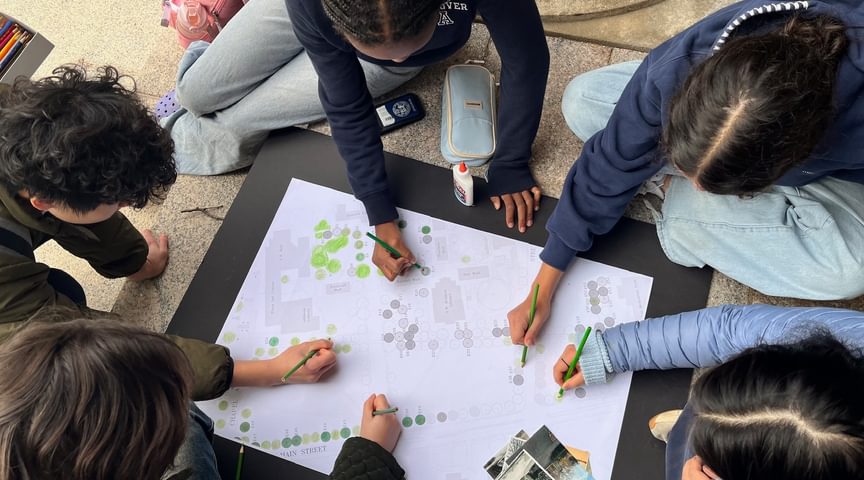
With archival images in hand, students and faculty walked along the Elm Arch to find the exact vantage points depicted in photographs, tracing the steps of generations past. After solving their puzzles, groups took a picture from the same perspective to include on a collage overlaid on a campus landscape plan—revealing how Andover’s elms, like the institution itself, continue to grow and endure.
“Now I see the how the elms serve as living witnesses to the school’s past,” says Nadine Carniaux ’29. “Walking among them made me think about all the people who have walked that same path before me—decades apart yet still connected by the same trees—and how traditions and memories are quietly preserved in the landscape itself.”
Exploring the ongoing preservation of the Elm Arch was inspired by current exhibitions at the Addison— Making Their Way: The Florida Highwaymen Painters and Captive Lands—that pull the lens back on landscapes quietly shaping how we live, learn, and connect, informing our sense of place and revealing the values of the people who tend them. Both exhibitions are on view now through January. Learn more at Addison Gallery of American Art.
Categories: Magazine
Other Stories