

August 15, 2025
A journey toward truth: Faculty & staff explore Civil Rights in Alabama
Abbot Academy Fund grant sparks an immersive experienceOn March 7, 1965, some 600 civil rights marchers, led by the Rev. Hosea Williams and John Lewis, set out from Selma to Montgomery—55 miles away—to protest the denial of voting rights for African Americans.
Met by state troopers blocking their path at the Edmund Pettus Bridge, the marchers were attacked by police using whips, clubs, rubber tubing wrapped in barbed wire, and tear gas. The gruesome scene, captured by news cameras, became known as Bloody Sunday.
In June, a group of Phillips Academy educators traveled to Alabama on a multi-city tour, visiting sites and landmarks of Black-led advocacy and organization—walking in the footsteps of civil rights leaders (including crossing the Edmund Pettus Bridge), deepening their understanding of the movement’s legacy, and learning more about present-day social justice struggles. The trip, made possible by an Abbot Academy Fund grant for Civil Rights Community Development, centered on the work of the Equal Justice Initiative (EJI), based in Montgomery, Alabama. Once a key location during enslavement and the Civil War, the city later became central to the civil rights movement.
“The power of this experience comes from getting to walk the same ground where life-altering events happened and listening to a variety of voices—including children’s voices—share how they were personally affected,” said Casey Alexander Smith, instructor in studio art, who helped organize the program. “Hearing those stories that tell the complete truth—without the edited and filtered parts of history—is essential.”
The program included faculty, administrators, and staff from across disciplines and departments. Some participants had spent years studying this period; others were engaging with these truths for the first time.
“We were intentional about mixing the group,” said Smith. “Even faculty in the history department were hearing perspectives they’d never encountered. Our hope was that everyone left with something new.”
Tours of civil rights landmarks and time spent in the Legacy Museum—founded by acclaimed public interest lawyer Bryan Stevenson and EJI—revealed powerful, often painful stories: of children impacted by enslavement, of families torn apart by racial violence, and of systemic injustice from slavery to mass incarceration. These stories, layered with emotion, left a deep impression on participants—as educators, parents, and individuals.
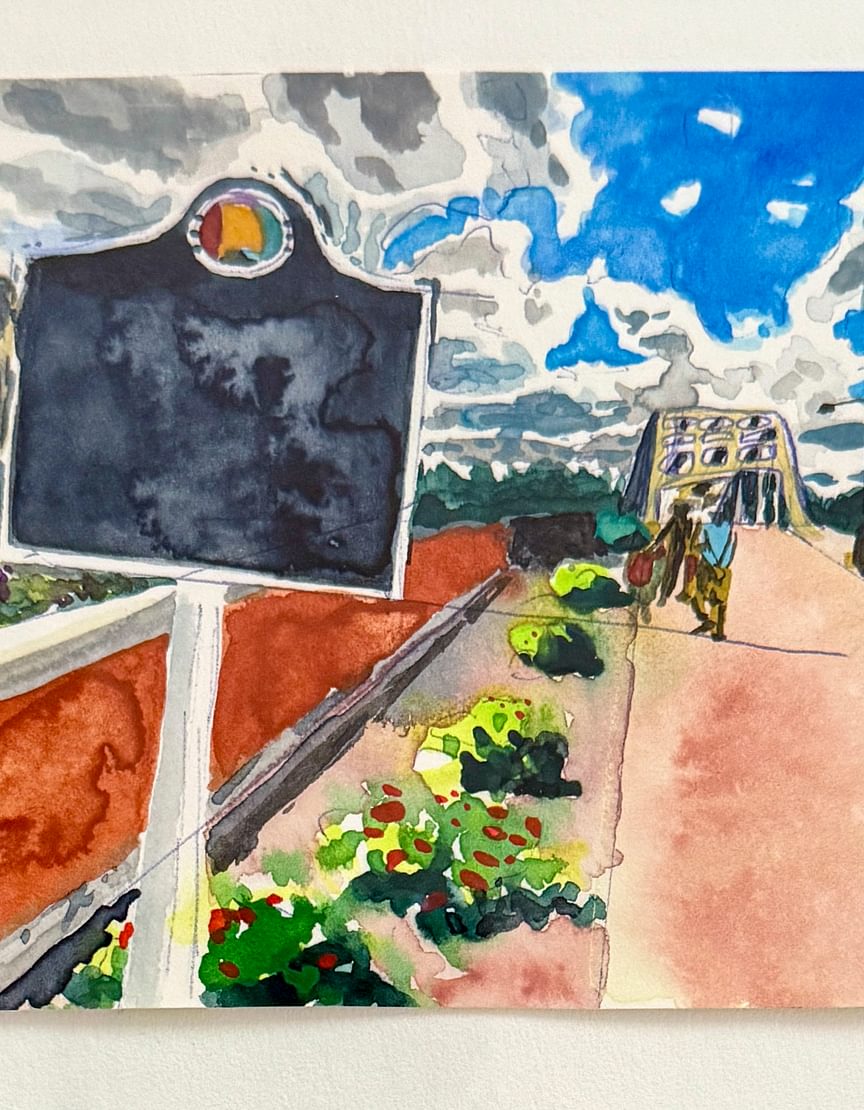
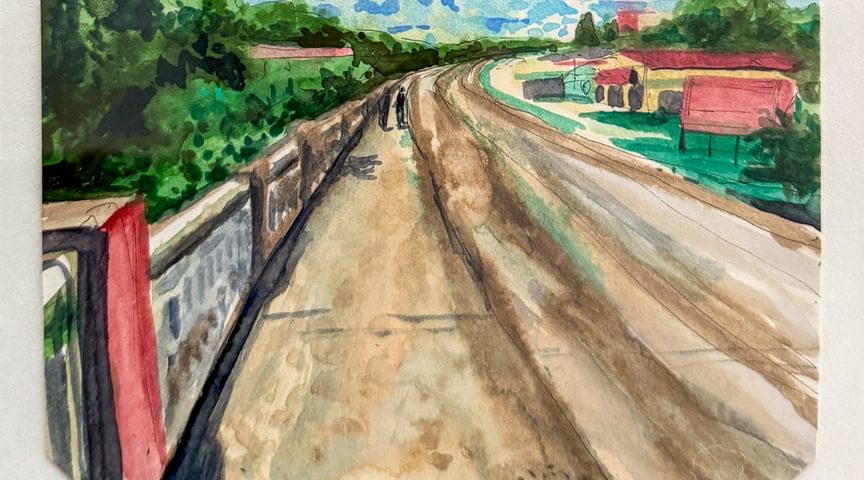
“Being in spaces where people risked their lives for their rights makes me think about how I can be braver, how I can listen better, and how I can empower and celebrate all of my students,” said art instructor Eve Avalos, who documented her reflections through a series of watercolor paintings created during the trip.
For Avalos, the experience was both emotional and enduring. “Standing in the places where history unfolded leaves and imprint that never fades—it becomes a part of who you are and how you move through the world,” Avalos explained. She is already thinking about how to weave the history into a class she co-teaches with Angela Parker, educator for Academy engagement, at the Addison Gallery of American Art. Parker also took part in the Alabama journey.
“Helping our students become better critical thinkers and thoughtful citizens is always at the heart of this work,” Avalos added. “This experience has given me deeper context to bring to those conversations.”
In 2025, Alabama will mark several significant anniversaries: the 60th anniversary of Bloody Sunday and the Selma to Montgomery Voting Rights March, as well as the 70th anniversary of the Montgomery Bus Boycott.
“Social justice in America is a complex topic,” said Allen Grimm, instructor in theatre and dance and co-facilitator of the program. “It’s often mistaken as a singular cause. But the deeper impact lies in identifying truths—plural. Everyone’s story has validity, even when difficult to hear. That’s what social justice should be about.”
The Civil Rights Community Development cohort plans to continue meeting and exploring how to incorporate this experience into their teaching, imagery, and everyday decisions. The long-term hope, added Smith and Grimm, is a ripple effect “where greater understanding leads to greater change through action.”
Learn more at eji.org
Categories: Magazine
Other Stories


Barry McCaffrey ’60, a retired four-star Army general, on Andover and what it takes to lead through a crisis