

German
About Our Department
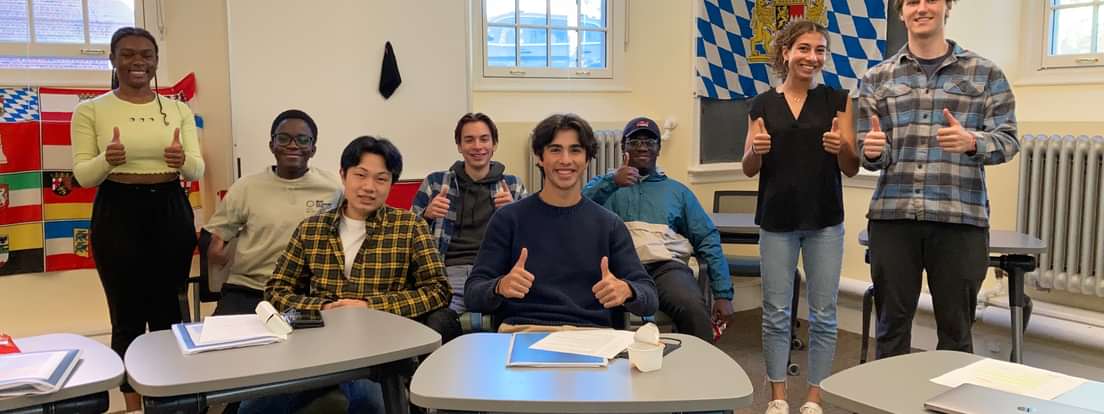
We believe that the understanding of other languages, cultures, and identities does indeed give us a unique insight into our own. With that understanding as a guiding principle, the German Department at Andover explores culture and identity in its language courses. Art, current events, film, history, music, poetry, and theater are key components of our course offerings.
To facilitate student learning our goal is to foster a positive, inclusive, and collaborative learning environment for all students. To that end we follow these best practices:
- Use German as primary mode of class instruction
- Assess student work multiple times per week
- Provide, timely feedback on work
- Provide additional support during conference periods and through the peer tutor program
- Solicit informal and formal student feedback on a regular basis
- Adapt courses on an ongoing basis to reflect students’ prior preparation
- Facilitate a 3-week summer homestay study program through the American Association of Teachers of German (AATG)
- Work collaboratively with each student to identify their best learning practices
He who does not know another language, does not know his own.
”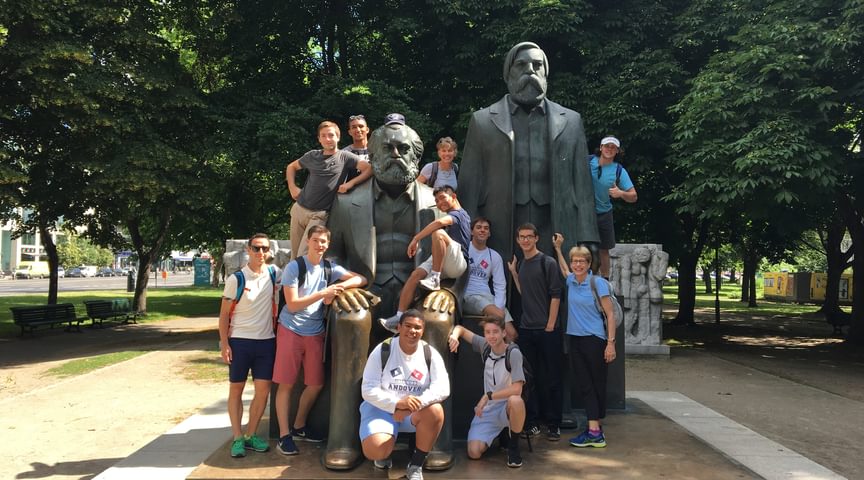
Students in Berlin, Germany.
Our Department
Meet the German team. Benjamin Duclos is the Department Chair.
 az
az
Close

“I approach my role as world language educator with the goal that those students I work with develop into ethically sound and morally courageous global citizens who have the tools and humility to make a better world, one built upon knowledge and goodness.”
Sample Courses
German 100
German 100 is designed for the absolute beginner! No previous experience in German or any other world language is needed to enroll in this course. A yearlong elementary course in speaking, reading, writing, listening comprehension and culture. German 100 offers significant daily structure and support in order to facilitate successful language learning. Classes are highly interactive and include ample time for practice and Q&A. Songs, games, short videos, films, current events and history lessons are integrated into the language lessons.
German 300
The final course needed to complete the language requirement in German. In the fall term students learn to narrate short stories in oral and written format using the cartoon series Vater und Sohn. In the winter term the course focuses on the student resistance movement in Munich Germany during the 1940s. The adapted short story Sophie Scholl - Die Weiße Rose and feature film: Sophie Scholl: The Final days make up the course materials. In the spring term the class focuses on the Stolperstein art project by German artist Günter Demnig. Primary sources are the Stolperstein documentary, TV interviews and newspaper articles.
Learning in the World
The Berlin History, Culture and Language Program is designed to dovetail with German 300, “Berlin: From Imperial Capital to Weltstadt.” The 10-day program has two compelling objectives: to offer PA students additional language practice through half-day classes at the Inlingua Sprachcenter while connecting what they have learned about German history to the richness of present-day Berlin. This is experiential learning at its best.