May 06, 2026
Remembering Tom Cone
A teacher who saw the world in full bloom(Submitted by family)
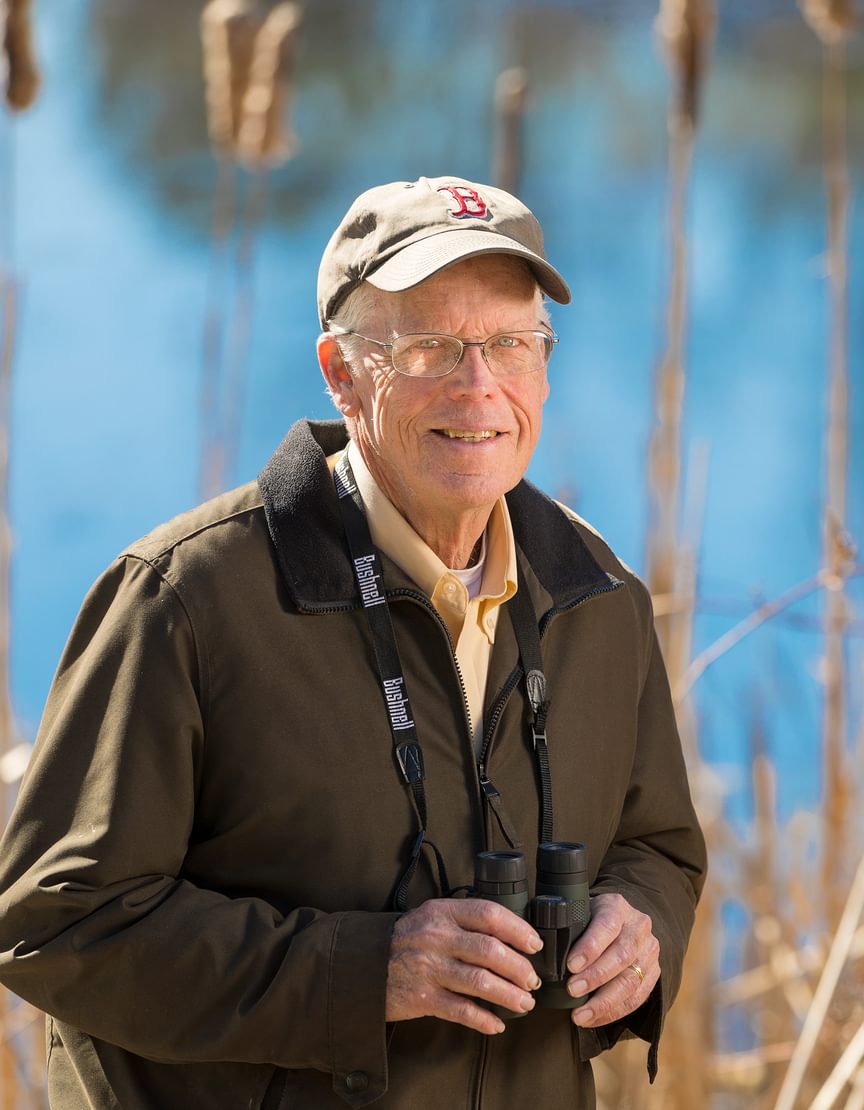
Faculty Emeritus Thomas Edward Cone III died peacefully on April 24 at the age of 83. A biology instructor for 51 years at Andover, Tom built a legacy that became a living field guide; he was patient, observant, encyclopedic, and constitutionally unable to walk past something alive without stopping to explain why it mattered.
Early Years
Growing up in Princeton, NJ, and Bethesda, MD, Tom explored ponds, fields, and woodlots with wonder. His mother, a nurse, had great patience with his menagerie of dogs, cats, canaries, parakeets, snakes, turtles, foxes, and skunks. His father, a doctor, encouraged him by bringing home research frogs from the local hospital.
Tom graduated from Trinity College with a degree in biology and a minor in education. He later earned a Master of Arts in Teaching in Biology from Brown University.
After college, he served in the Peace Corps in Liberia and taught at a boys’ residential school. To help the school support itself, he oversaw the construction of chicken houses and procured more than 1,000 day-old chicks; within a few months the operation was producing eggs and bringing roosters to market. He helped build pig sties from mud blocks and worked with an agricultural specialist to develop a rice paddy. The experience shaped his conviction that teaching and doing were interconnected, a conviction that would define his years at Andover.
Andover Life
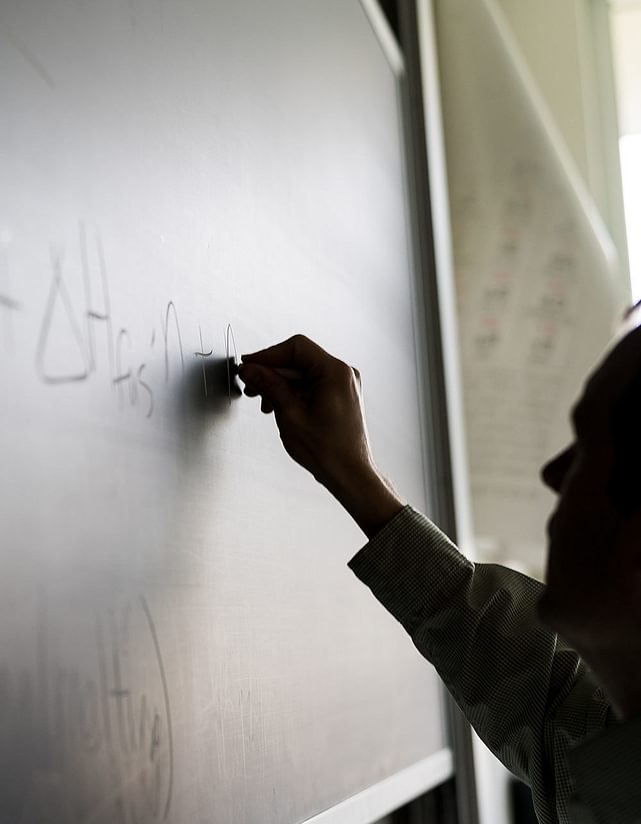
Tom taught introductory biology, ecology, microbiology, botany, ornithology, animal behavior, physiology, and marine biology. His department chair and best friend once described Tom’s range by saying that if you needed someone to cover a class on anything from the circulation of a bird's heart or the behavior of an octopus, Tom was the first call you made, and he would walk in ready.
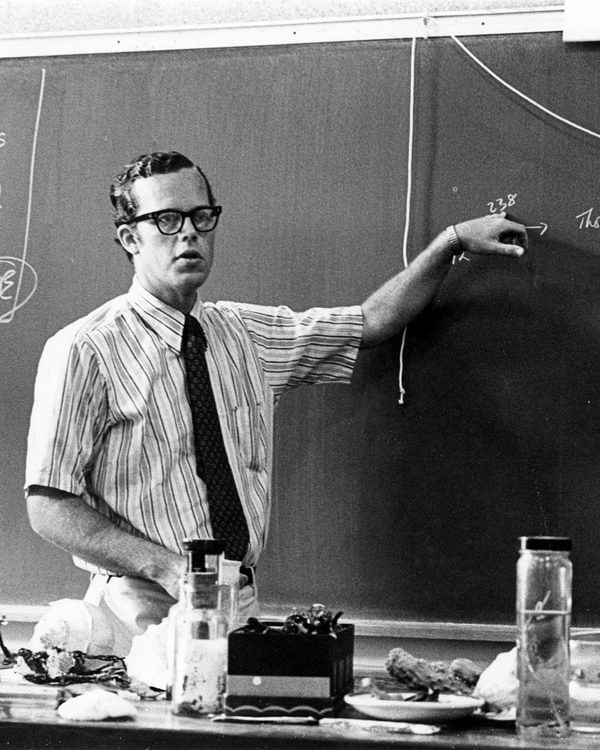
He taught one of the first ecology courses offered at any American secondary school, around the time of the first Earth Day, and spent the following five decades watching the subject migrate from elective curiosity to existential urgency. He gave consistent and early attention to climate change, tracking phenological shifts in the Andover ecosystem—lilacs blooming four days earlier than they had a half-century before, apple trees a week ahead—understanding that the most consequential data is often the data nobody else thought to collect. In 2007, he co-presented a faculty seminar on global warming's measurable effects on local ecology, from shifts in bird ranges and brook trout habitat to the accelerating pace of the growing season.
Less visibly, Tom advocated for the living campus. He worked to save Andover's elm trees from Dutch elm disease at a time when the disease was devastating the species across New England. When the campus faced pressure to expand parking at the expense of green space, he found solutions to the logistical problem without sacrificing trees and plantings.
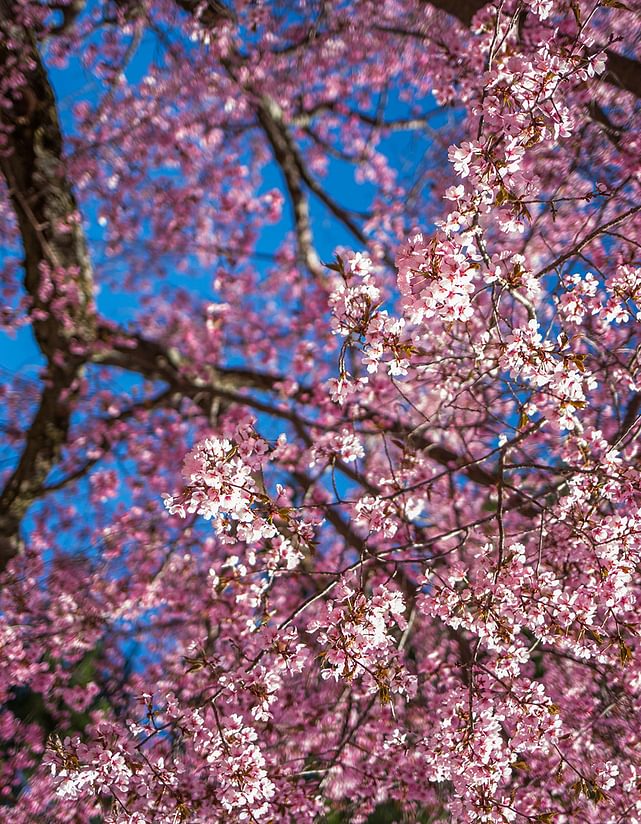
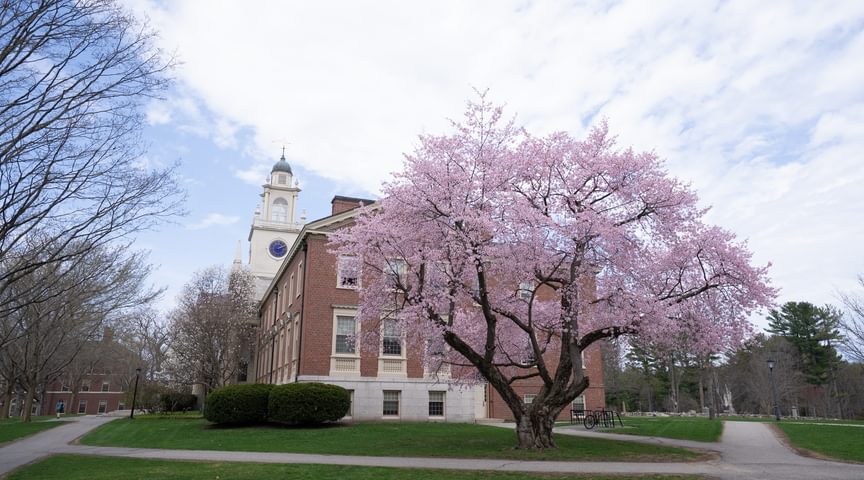
One of the most celebrated episodes of his tenure involved a cherry tree. When Evans Hall was built, an administrator determined that a cherry tree was obstructing the view and should come down. Tom made a rational and impassioned case for its preservation, rallied faculty and students, and the tree was spared. The tree was threatened again when Gelb Science Center took the place of Evans. This time, Tom not only saved the tree, he founded the Cherry Tree Cookie Festival, held each spring beneath the blooming canopy, distributing cookies to passersby and inviting them to enjoy the blossoms above.
In the summers he taught marine biology, which included whale-watching trips off the Massachusetts coast followed by seafood dinners back on campus, with lobster, clams, and mussels, that were equal parts field study and a celebration of the ocean's abundance.
Tom had a gift for the well-timed pun, the groan-inducing joke slipped into a biology quiz, the Garfield comic that illuminated a point about animal behavior. His humor was woven into the fabric of his teaching; students remember it alongside the content, as he intended.
In 1986, he was named Outstanding Biology Teacher by the National Association of Biology Teachers. That same year, he received an Abbot Academy Association grant to conduct research on bee vision. In 2002, he traveled to Nairobi as part of a Phillips Academy International Academic Partnership to lead a week-long AIDS education workshop for approximately 100 Kenyan teachers, one of several ways his classroom extended beyond Andover's campus.
Tom directed PALS, an educational enrichment program for middle schoolers in Lawrence, from 1990 to 2013. During the PALS summer sessions, he ran a hands-on animal room under Cochran Chapel, with mice, snakes, turtles, and guinea pigs, where students learned to care for animals and measure heartbeats and growth. He also coached varsity squash from 1980 to 2010, and JV squash through his final year, earning a devoted following among many players.
He served as house counselor for 17 years, first at Eaton Cottage and then at Andover Cottage, where Tom and his family kept bees, turkeys, ducks, geese, chickens, goats, rabbits and ponies, and cultivated an extensive garden including flowers, vegetables, berries, fruit trees and giant pumpkins.
Tom's largest pumpkin approached 900 pounds; his youngest child had challenged him to grow one she could sit in once it was carved, and he was not the kind of man to let a challenge like that go unmet. He entered them annually in the Topsfield Fair, lifted into his truck by the JV girls' soccer team. He and his wife, Julie, later co-authored a children's book, The Giant Pumpkin Mouse House, illustrated and designed by his artistic in-laws and loved by his grandchildren.
Birder, Wildlife Rehabilitator, Field Naturalist
A serious birder, Tom's life list spanned North and South America, East and West Africa, Australia, Papua New Guinea, Vietnam, Ireland and Europe. He was equally attentive to the birds at his own feeders, noting that the most meaningful observations are those made close to home, where repetition sharpens perception and seasonal variation reveals ecological continuity. He installed clips on his feeders after years of raccoon interference and identified the first chickadee of fall with the same satisfaction he might bring to a lifer in the Serengeti.
Tom was also a wildlife rehabilitator, who local veterinarians called when someone had found an injured hawk or a disoriented owl and didn't know what to do. He was equally in demand when a swarm of bees needed relocating. When not in Andover, he could be found at a Red Sox game; or kayaking, building campfires, fetching well water and fending off mosquitos then relaxing in a hammock at his cabin on the Maine coast; hiking in the White Mountains of New Hampshire; and scuba diving and snorkeling in Key West.
Tom was a longtime trustee of AVIS, a local land conservation organization which manages more than 30 reservations and over 1,100 acres of open land in Andover. On April 22, 1970, as one of the organizers of Earth Day in Andover, Tom led the student group Andover Ecology Action, in a downtown cleanup. The resulting pile of trash reportedly reached 12 feet high. That same day, AVIS set up a table to educate townspeople on air and water quality and the dangers of pesticides; some local shop owners agreed on the spot to stop selling them. It was a characteristic Tom Cone operation: practical, cheerful, and effective.
After retiring in 2017, Tom lived in North Carolina and Rhode Island, where he continued birding, gardening, and enjoying his 60-gallon aquarium, as well as participating in citizen science through the Cornell Lab of Ornithology.
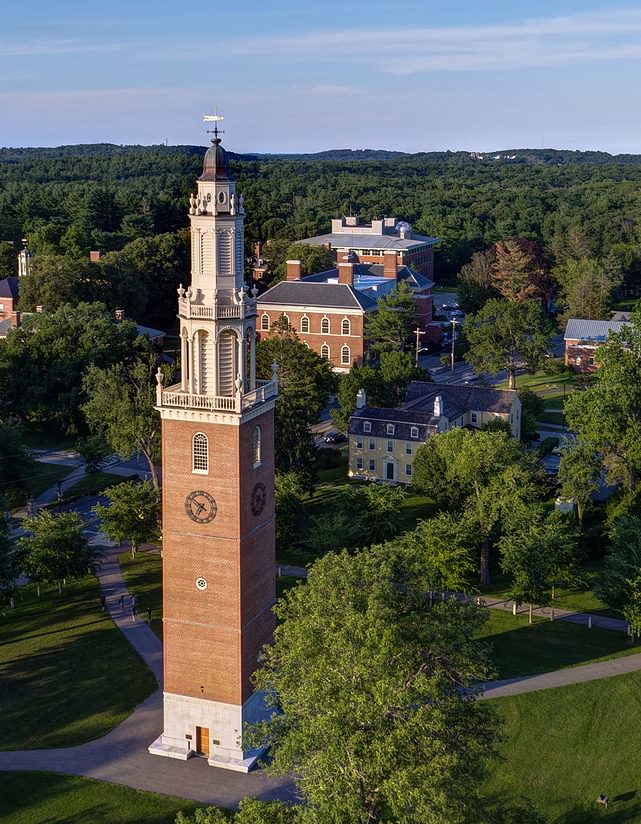
Tom is survived by his wife, family, and a wide circle of friends, former students, and colleagues whose lives were shaped by his curiosity, his generosity, and his example, as well as by a cherry tree outside Samuel Phillips Hall that is, at this writing, in bloom.
(Those who wish to honor Tom's memory may make a donation to AVIS (avisandover.org).
Top photo by Dave White
Categories: Academics
Other Stories


PA's alumni magazine acknowledged for excellence in design and writing