

June 11, 2026
Above and beyond
Four pilots on breaking barriers and inspiring the next generationby Rita Savard
THEY CAME UP A GENERATION APART—one navigating a Navy that kept women out of combat, one flying F-18s over Afghanistan and Iraq after 9/11, one returning to the air just 12 weeks after giving birth, another piloting Black Hawks in Army operations. Sali Gear ’79, Becky Dowling Calder ’94, Laurie Coffey ’95, and Jennifer Bales ’04 entered systems still catching up to them. Determined to serve, they set new standards for those who followed.
Q. WHY DID YOU CHOOSE A CAREER PATH OF SERVICE TO COUNTYRY?
SALI: It felt like a natural extension of the way I was raised. After my father passed away, my mom raised us with clear values: God, country, and family. She taught us to be grateful for opportunity and always to contribute where and when we could. When I reached the point of deciding what I was going to do with my life at Andover, the military just felt like a place where those values could be lived in a very direct way.
BECKY: A military career wasn't something I always wanted, but looking back I realize the concept of non sibi was foundational to who I would become. The Naval Academy recruited me for basketball, but what shaped me the most wasn't sport—it was the mindset to work hard for something bigger than myself, to sacrifice for the success of a team. It was ingrained in me by my family, my coaches, and my time at Andover. Serving in the Navy felt like a continuation of who I was becoming.
LAURIE: I got involved with Andover’s community service programs and found it fulfilling. That non sibi ethos blended seamlessly into the challenge of embarking on a military career in service of my country.
JENN: My first day of lower year at Andover was 9/11. We were in All-School Meeting when everything unfolded. I went to West Point intending to become a doctor but during the height of the wars in Iraq and Afghanistan, the names of graduates killed in combat were announced at lunch as over 4,000 cadets would silently stand at attention. Eventually, the names were people I knew. That’s when I realized I wanted to be as close to combat as possible and aviation felt like the right path.
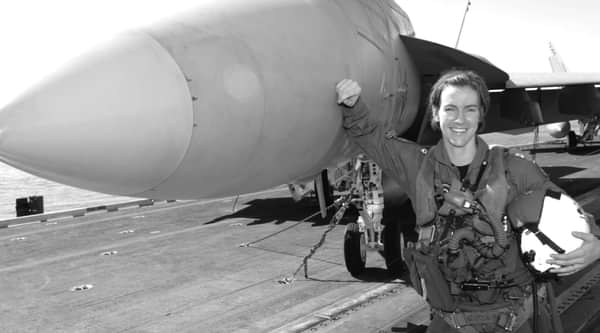 Navy Capt. Becky Dowling Calder ’94 was the first female pilot to graduate Top Gun, the Navy's elite Strike Fighter Tactics Instructor program. An F/A-18 Hornet pilot and Andover 12-letter athlete, Calder was inducted into the New England Basketball Hall of Fame and Andover Athletics Hall of Honor. In 2014, her No. 32 became the first women's jersey retired by the Navy.
Q. HOW WOULD YOU DESCRIBE THE LANDSCAPE FOR WOMEN PILOTS IN THE MILITARY WHEN YOU ENTERED?
SALI: It wasn’t welcoming, but I didn’t expect it to be. I was the first woman in an A-4 squadron. On my second day, a student control officer told me, “You're the first woman here, and I'm going to make sure you're the last.” Who do you take that to? And if you did, who would believe you?
BECKY: I graduated from the Academy with a class of about 8 percent women. When I started flight school, there were only a couple of women in my class. When I selected jets, I was the only woman. What I understand now, is that I had incredible self-efficacy. I never wanted anyone to question why I was there or if I belonged.
LAURIE: Even in the late ’90s, the fighter community was still less than 1 percent women. I never had women in my squadron or in leadership. The hardest part came when I returned to flying when my daughter was 12 weeks old. They said they treated every one the same—but that meant no flexibility for a single parent with an infant.
JENN: Women couldn’t serve in certain combat roles. Aviation was one of the closest paths to combat. Because of the women who came before me, I felt like I was standing on the shoulders of giants. I didn’t have to break the ceiling—they already had.
Q. WHAT DID YOU FEEL KNOWING YOUR PERFORMANCE MIGHT SHAPE THE EXPERIENCE OF OTHER WOMEN?
SALI: How you presented yourself would impact the generation of women pilots behind you. Nobody would say it, but you knew. I was the only woman there so falling short in any way was never an option.
BECKY: When you are the model minority, you carry the weight of an entire gender. It's heavy. We were at war, and I had a job to do, so I focused on doing it the best I could.
JENN: Being average as a woman often doesn’t feel like enough. You feel pressure to outperform because your reputation follows you. You always have to be at the top of your game.
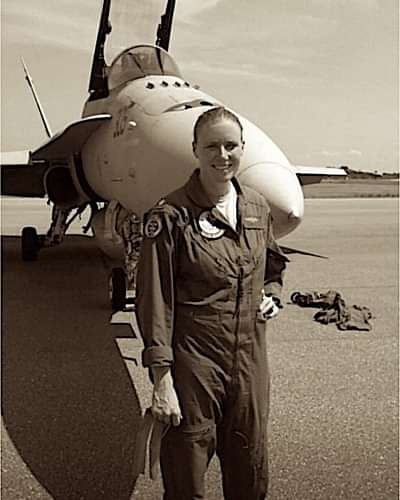 Navy Capt. Laurie Coffey ’95 was an FA/18 fighter pilot with more than 2,000 flight hours and 400 carrier landings. Coffey is a Naval Academy graduate and Andover Athletics Hall of Honor Inductee. She holds an MA in national security and strategic studies and now serves as a prosecutor for the Department of Children and Family Services in New York.
Q. IN COMBAT, DECISIONS MUST BE MADE IN REAL TIME—SOMETIMES WITH INCOMPLETE INFORMATION AND LIVES ON THE LINE. WHAT DOES THAT DEMAND OF A PERSON?
LAURIE: You’re constantly weighing your mission, protecting your people, and protecting civilians. Sometimes you can’t do all three. You have to be decisive, but also have the moral courage to say no. You have to be able to live with what you authorize.
BECKY: Every mission is different, and it demands your best. What you fall back on is everything that came before—every hard thing you survived. You make the best decision you can in the moment, and you trust others to do the same.
JENN: Combat is unforgiving. In aviation you're not just dealing with the enemy—you’re also dealing with the immutable force that is gravity. Regardless of what else is happening around you, you must aviate, navigate, and communicate. As a Black Hawk pilot, what I did, or failed to do, directly affected soldiers on the ground. That humbling reality stays with you.
Q. WHAT KEPT YOU GOING?
SALI: My mother taught me: when things get tough, you put your head down and you do better. I found the grit at Andover—it asked me what my very best actually was. That served me in the military when the chips were down and I just had to dig in. And I always had faith. Even when my dad wasn't living, I felt like he was with me.
BECKY: My faith, my family, and the idea that I was doing my part to serve our country and protect the troops on the ground that were fighting on the front lines. Preparation was my superpower.
JENN: Stubbornness and tenacity. A fixed resolve that I wasn’t going to quit. Rowing crew also helped shape that mindset—and it’s where I met my husband.
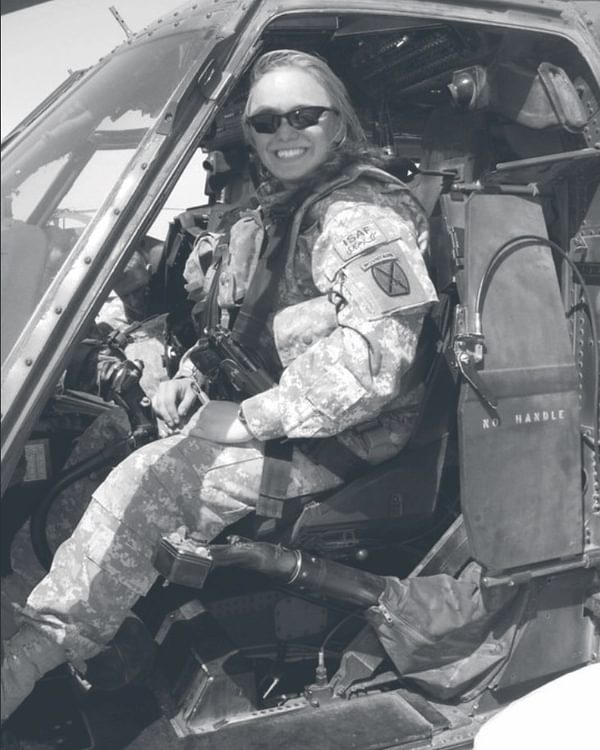 Army Lt. Col. Jennifer Vanecek Bales ’04 was an AUH-60 Black Hawk helicopter pilot with combat deployments to Iraq and Afghanistan in support of Operations Inherent Resolve and Enduring Freedom. She currently serves as an Army strategist with the U.S. Army Futures and Concepts Command.
Q. WHAT DID YOU LEARN AT ANDOVER THAT CARRIED YOU INTO SERVICE?
SALI: Besides finding grit at Andover, the service component was always looked upon so highly—to serve and support your community in whatever way you could. That planted something in me that never left.
BECKY: The concept of non sibi at Andover became non sibi sed patriae (not for self, but for country) at the Naval Academy. Service to others is the through line. I learned at Andover that true leadership means serving others first.
JENN: Confidence and humility. There’s always someone who knows more than you. Andover gave me the confidence to seek those people out and the humility to learn from them.
Q. WHAT DID MILITARY SERVICE TEACH YOU ABOUT YOURSELF THAT YOU COULDN'T HAVE LEARNED ANY OTHER WAY?
SALI: That I was part of something bigger than myself. I'd done a lot of athletics—tennis, sailing, equestrian—where I was often the solo person relying only on myself. The military grounded me in a different way. Unit cohesion, shared responsibility—the understanding that the mission is never just yours alone.
BECKY: Resilience isn't optional—it's required. I learned I could endure more than I ever imagined, make decisions under pressure and keep moving forward when I wanted to give up. But I also learned resilience comes at a cost. It asks something of you—emotionally, mentally, even physically. And real strength is not just pushing through; it's knowing how to recover and reset, so you can give your best.
LAURIE: It gives you a permanent sense of equanimity. Nothing else in life is ever quite as stressful as making decisions daily where the consequences can be dire for others. Now I’m a prosecutor. People say my courtroom demeanor is so calm. I just think—the stakes are pretty low here. No one’s shooting at me. That perspective, if you can hold onto it, is one of the great gifts of service.
JENN: Leadership isn’t one-size-fits-all. Reading an article about (former Army Capt.) Tammy Duckworth helped change my perspective. She focused on small things—like making sure her soldiers had hot chocolate during cold mornings in training. People joked, but she led authentically and that made all the difference in her ability to lead her soldiers to perform their very best. I took that to heart. Being able to use the unique strengths we each bring—that diversity of people and ideas—is what is beautiful about the military and what makes it strong.
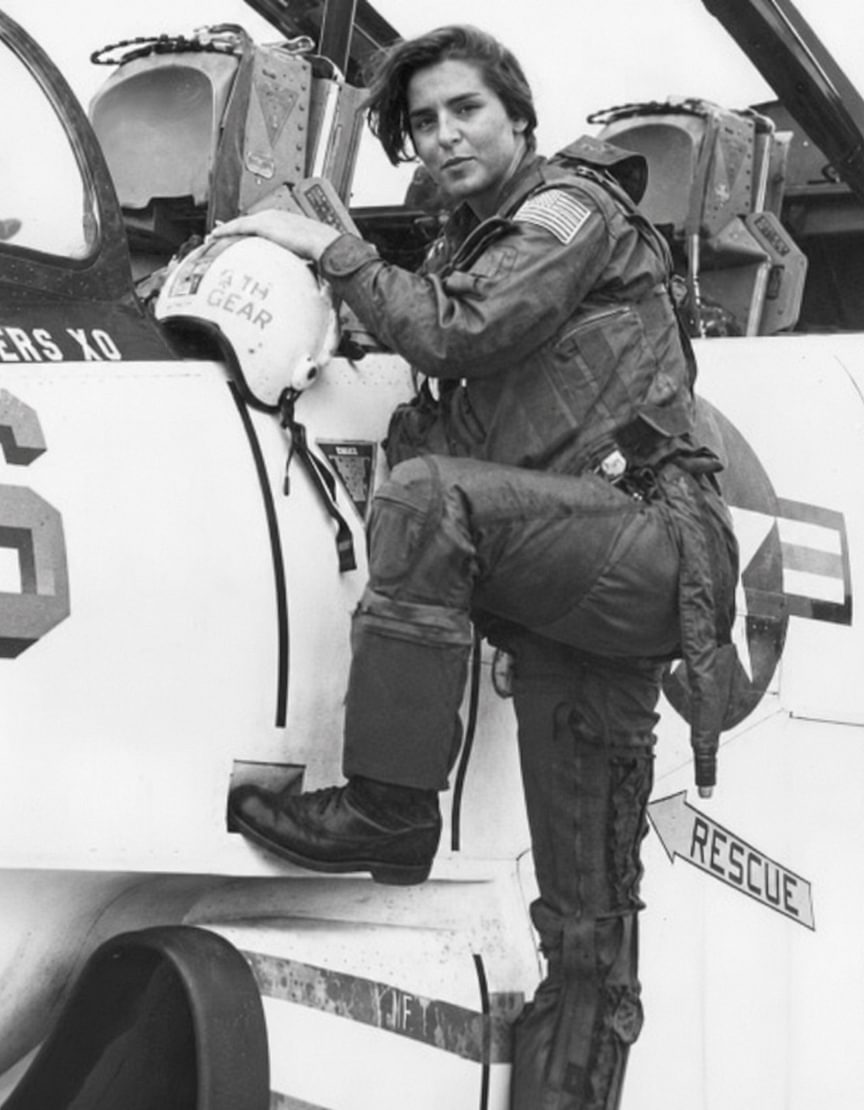
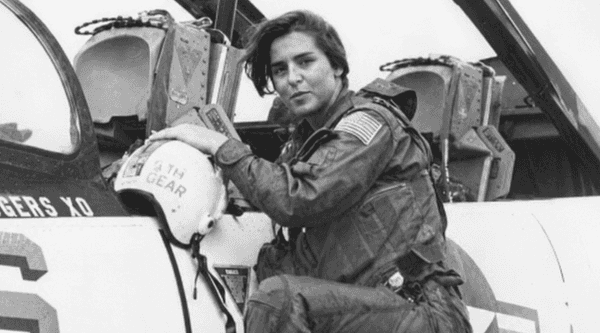 Navy Cmdr. Sali Gear ’79 was born into a Navy family. Gear pursued her dream of flying jets despite policies barring women from combat squadrons. Following her service, she was a commercial airline pilot for more than 30 years, and is the founder of Island Dog Rescue, which orchestrated the largest mass rescue of shelter animals ever—flying over 350 dogs and cats to safety after Hurricanes Irma and Maria.
Q. WHAT DO YOU HOPE FOR THE WOMEN WHO COME AFTER YOU?
LAURIE: A four-star female Air Force general once said she’d know there was equity when a woman could just be an average pilot—median, run of the mill—and no one would think anything less of her. That’s a luxury men have always had. When women in aviation become unremarkable, we’ll know something has actually changed.
JENN: My perspective has changed since becoming a parent. When I think about the next generation, regardless of gender, I hope they can pursue what they love with doors open to them. I hope we reach a point where we’re no longer talking about breaking glass ceilings, but simply about people following their passions.
BECKY: I hope they feel like they belong. Doing what you love while being able to serve others—I can't think of anything better.
SALI: In aviation, we always find the sun. You take off in fog, you can’t see a thing, and at 5,000 feet you punch through the clouds and the world opens. It’s been a symbol for me. What seems dark below—if you keep pushing on, you will find the light in the world.
Other Stories